 layrd.liveLayer by Layer
Oscillations and Simple Harmonic Motion
Seventeen connected videos on simple harmonic motion: what makes a motion SHM, its equation and the reference circle, superposition, the time period of pendulums, springs, liquids and rods, phase and timing, collisions and walls, energy, the energy and Taylor methods, shifted mean positions and two-body oscillations. Each part has worked examples on its page; the formula sheet, revision sheet and practice set cover the whole chapter.
Learning path · Formula sheet · Practice set
Print and revise: Revision sheet (PDF) · Formula sheet (PDF, one page)
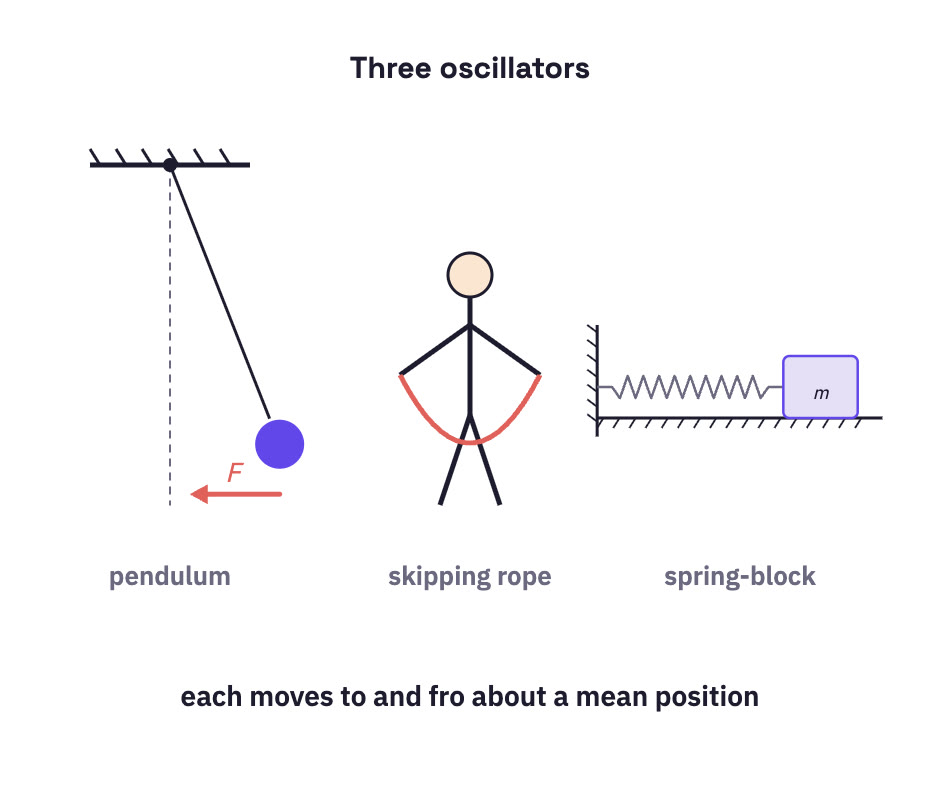
Periodic Motion, Oscillations and When Motion Is SHM
Define period, frequency, restoring force and amplitude, test whether a motion is simple harmonic from a = −ω²x, and see SHM as the shadow of uniform circular motion.
Periodic motion and frequency · Restoring force and amplitude · Free, damped and forced oscillations · Conditions for SHM · Reference circle
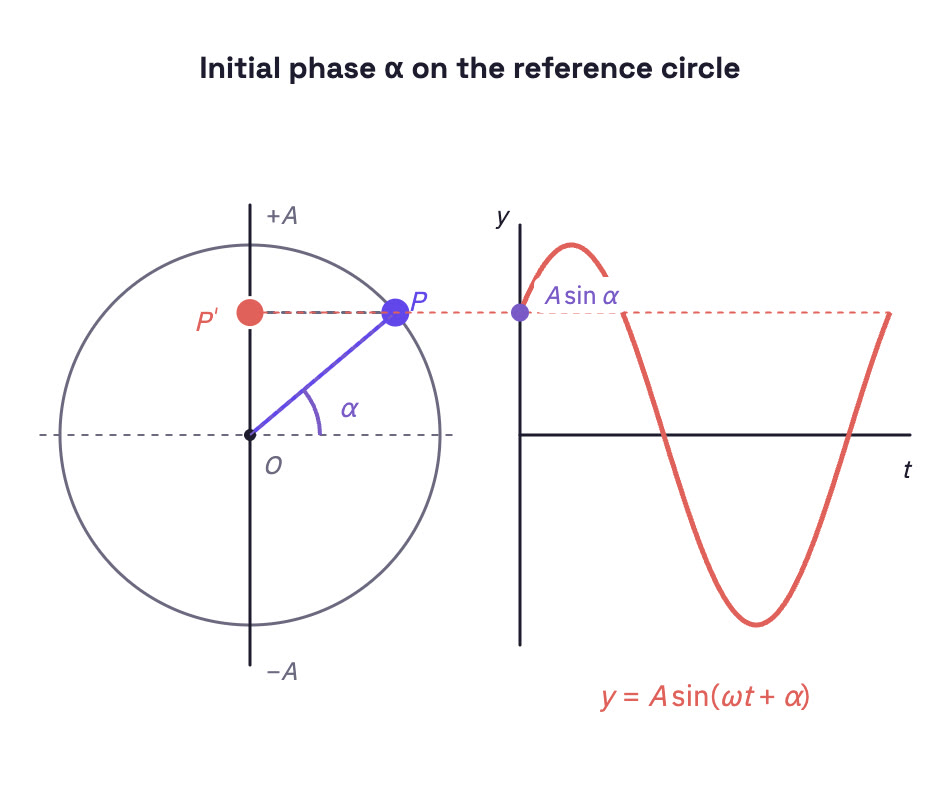
Equation of SHM, Phase, Velocity and Acceleration
Write y = A sin(ωt + α) from the starting point and direction, and derive velocity and acceleration against time and against displacement, with their graphs.
Equation of SHM · Phase and initial phase · v = ω√(A² − y²) · a = −ω²y · Differential equation of SHM
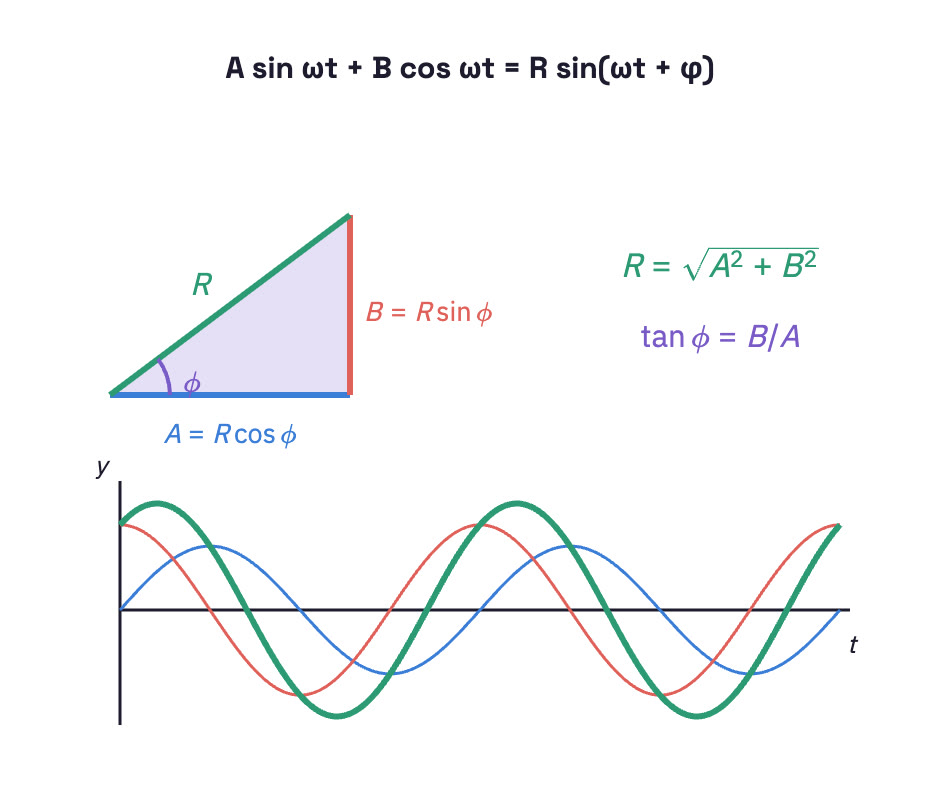
Reading SHM Equations and Apparent Weight on an Oscillating Platform
Test an expression for SHM, combine A sin ωt + B cos ωt into one sine, read amplitude, ω, phase, speed and kinetic energy from an equation, and find the reading of a scale on an oscillating platform.
Testing an SHM equation · A sin ωt + B cos ωt as one SHM · Reading A, ω and phase · Average speed in SHM · Apparent weight on an oscillating platform
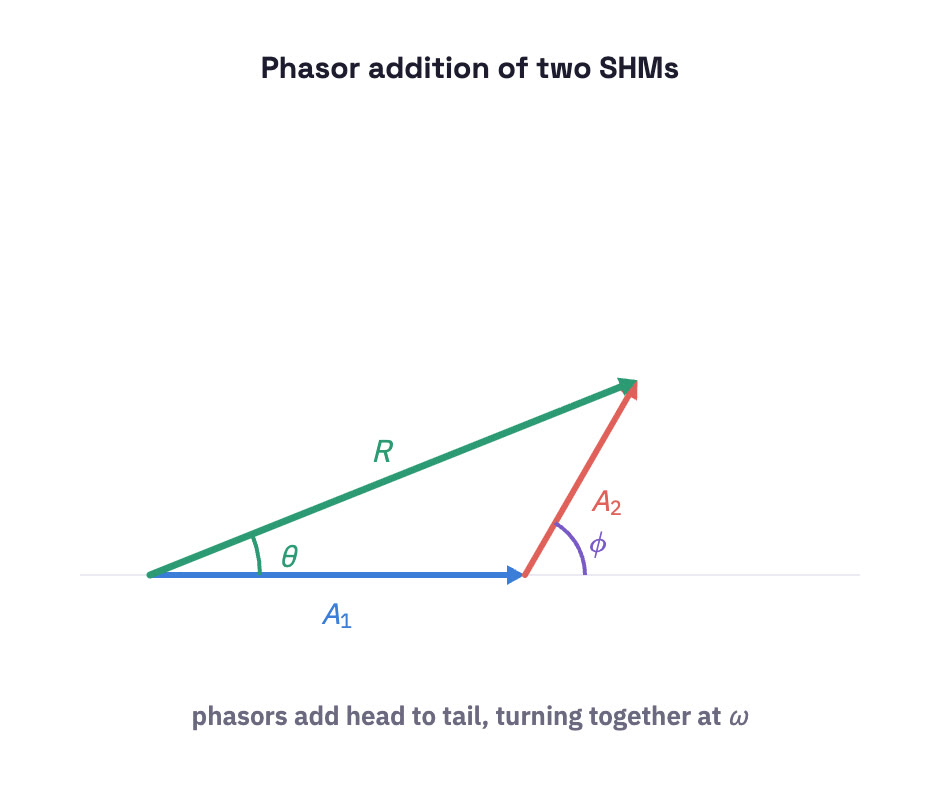
Superposition of SHMs: Same and Different Frequencies
Add two same-frequency SHMs with the phasor rule R = √(A₁² + A₂² + 2A₁A₂ cos φ), and split a product of sines and cosines into its independent SHMs.
Principle of superposition · Resultant amplitude and phase · Phasor addition · Different frequencies · Counting independent SHMs
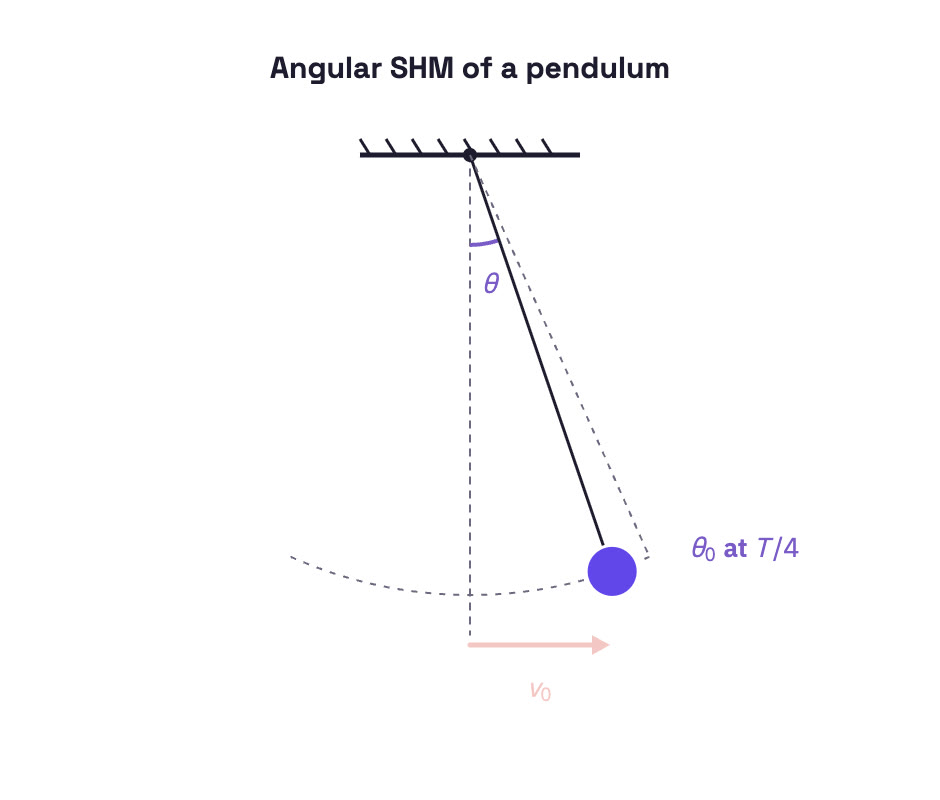
Angular SHM and the Three-Step Method to Find the Time Period
Describe angular SHM by its angle, angular velocity and angular acceleration, and find ω and T of any oscillator in three steps: equilibrium, small displacement, F = −kx.
Angular SHM · Angular velocity vs angular frequency · Restoring torque · Three-step method · ω = √(k/m)
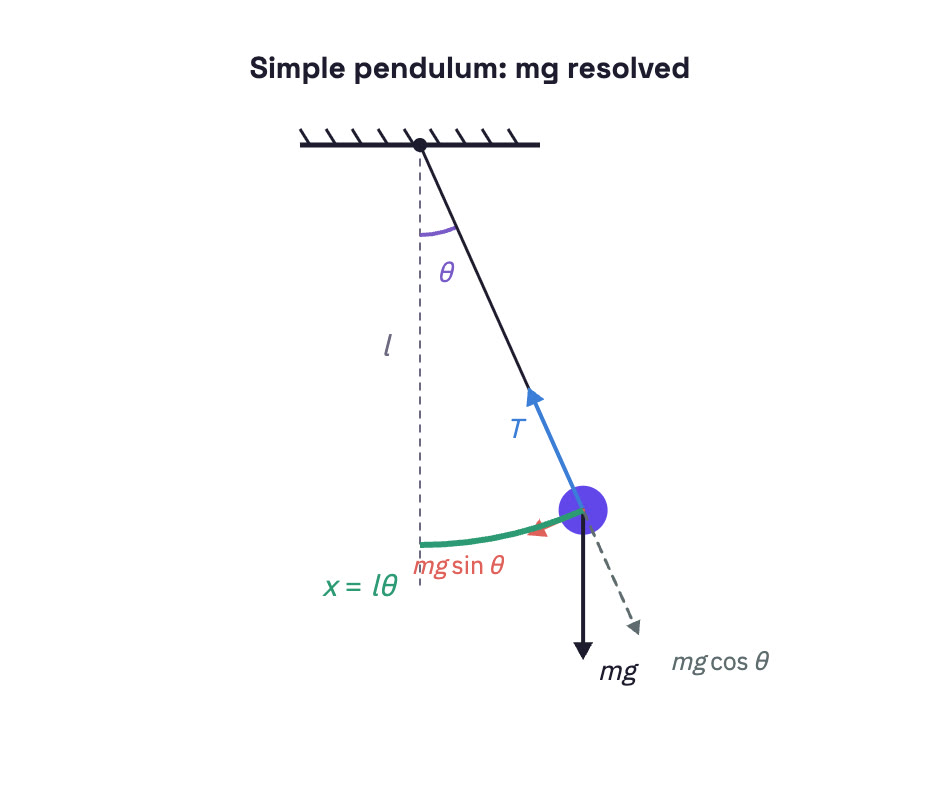
Simple Pendulum and Spring-Block Pendulum
Derive T = 2π√(l/g) for a simple pendulum, the string tension during the swing, and T = 2π√(m/k) for a vertical spring-block, including a load removed at equilibrium.
Simple pendulum · Seconds pendulum · Tension in a swinging string · Spring-block pendulum · Removing part of a load
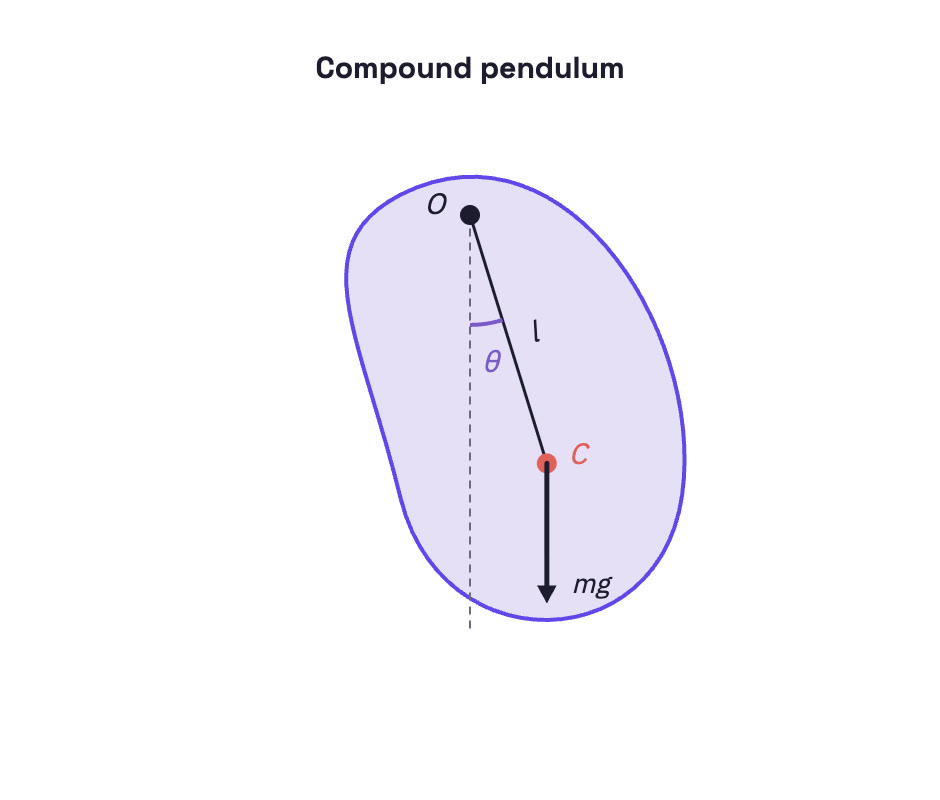
Compound and Torsional Pendulums, Equivalent Length and Minimum Period
Derive the period of a compound pendulum and a torsional pendulum, the equivalent length l + k²/l, and where to pivot a body for the shortest period.
Compound pendulum · Torsional pendulum · Radius of gyration · Equivalent length · Minimum time period
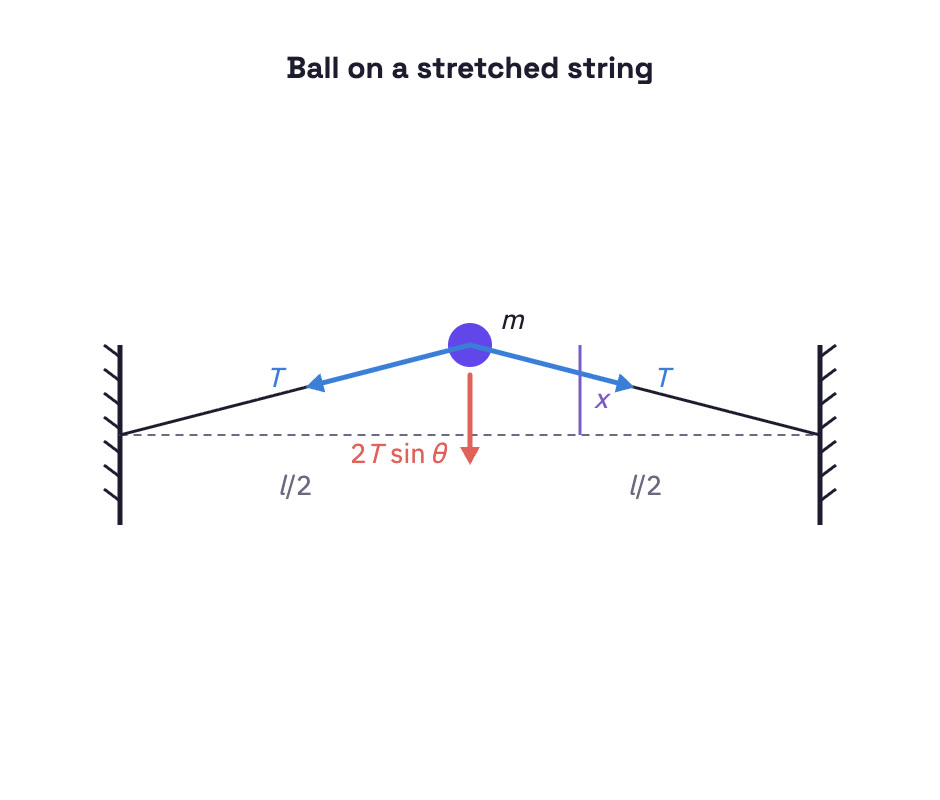
Time Period in Physical Situations: Strings, Effective g and Liquids
Find the period of a bead on a stretched string, a pendulum in an electric field, a lift, an accelerating cart or a liquid, a floating box and a liquid column in a U-tube.
Bead on a stretched string · Effective g · Charged pendulum · Pendulum in accelerating frames · Floating body · U-tube oscillations
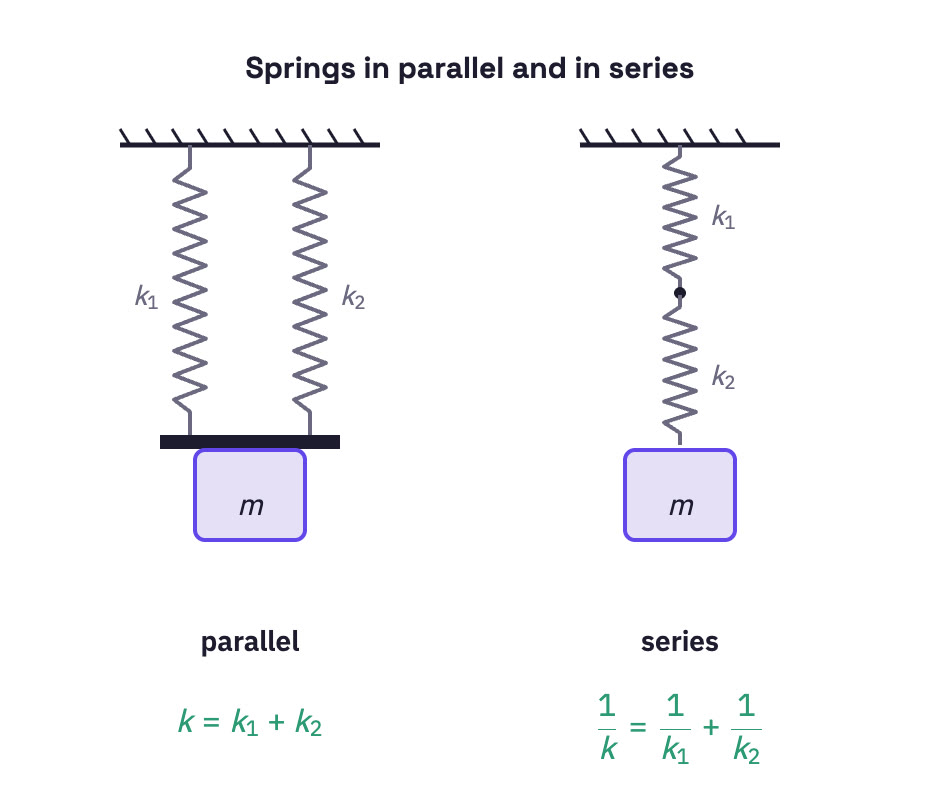
Springs in Series and Parallel, Cut Springs, Pulleys and Rods on Springs
Combine springs in series and parallel, find the stiffness of a cut spring and the effective k of spring-pulley systems, and the frequency of a rod held by springs.
Springs in parallel · Springs in series · Cut springs · Spring-pulley systems · Rod on springs
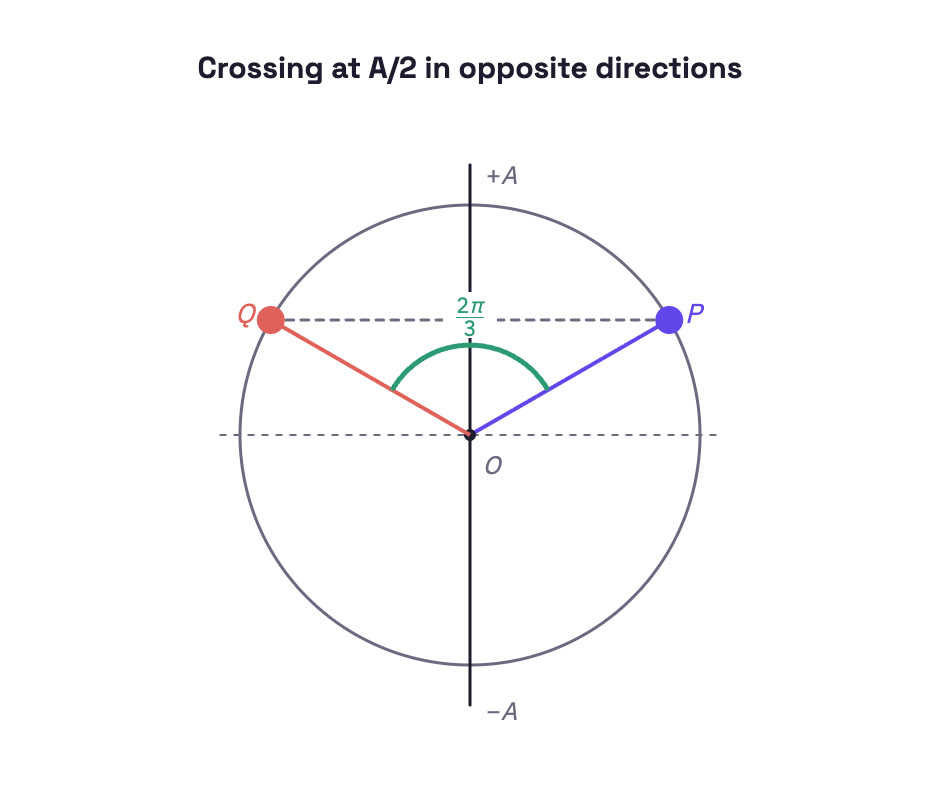
Phase Difference and Time Between Two Positions in SHM
Find the phase difference of two SHMs from their frequencies or from where and which way they move, and the time between two positions from the angle swept on the reference circle.
Phase difference · Same and opposite phase · Phase from position and direction · Time between two positions · Distance travelled in SHM
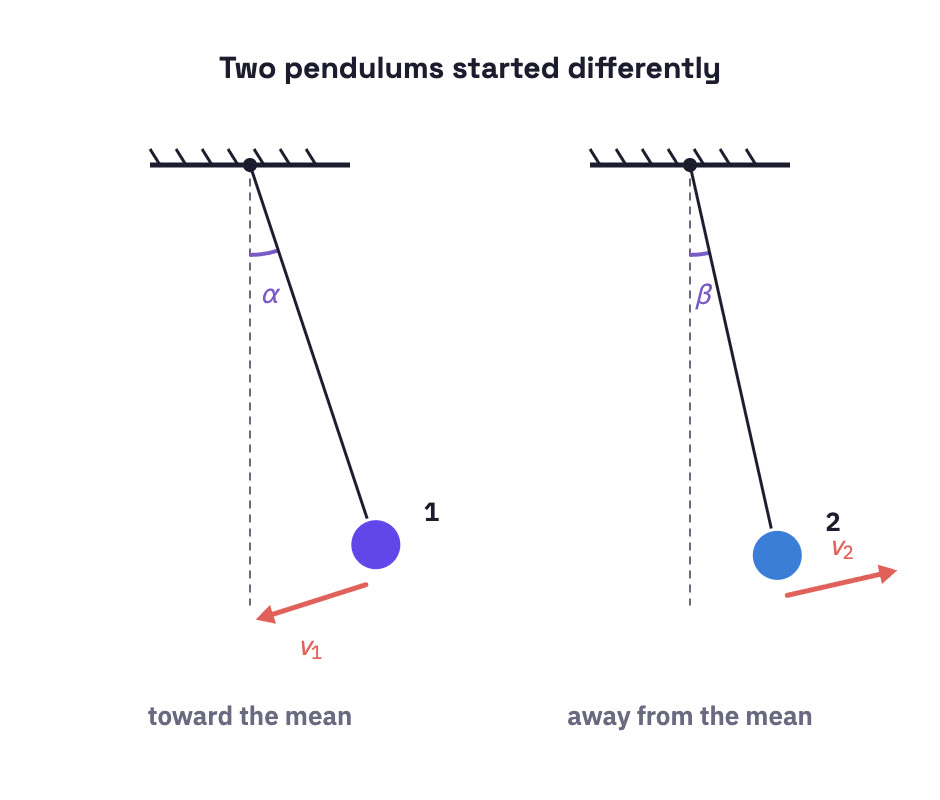
Sudden Changes in SHM: Collisions, Added Mass and Elastic Walls
Find the phase difference of two pendulums started differently, the new amplitude and timing after a collision, an added mass or an impulse, and the period of SHM cut off by an elastic wall.
Pendulums started differently · Collisions in SHM · Mass added at the mean or extreme · Impulse in SHM · Elastic wall in SHM
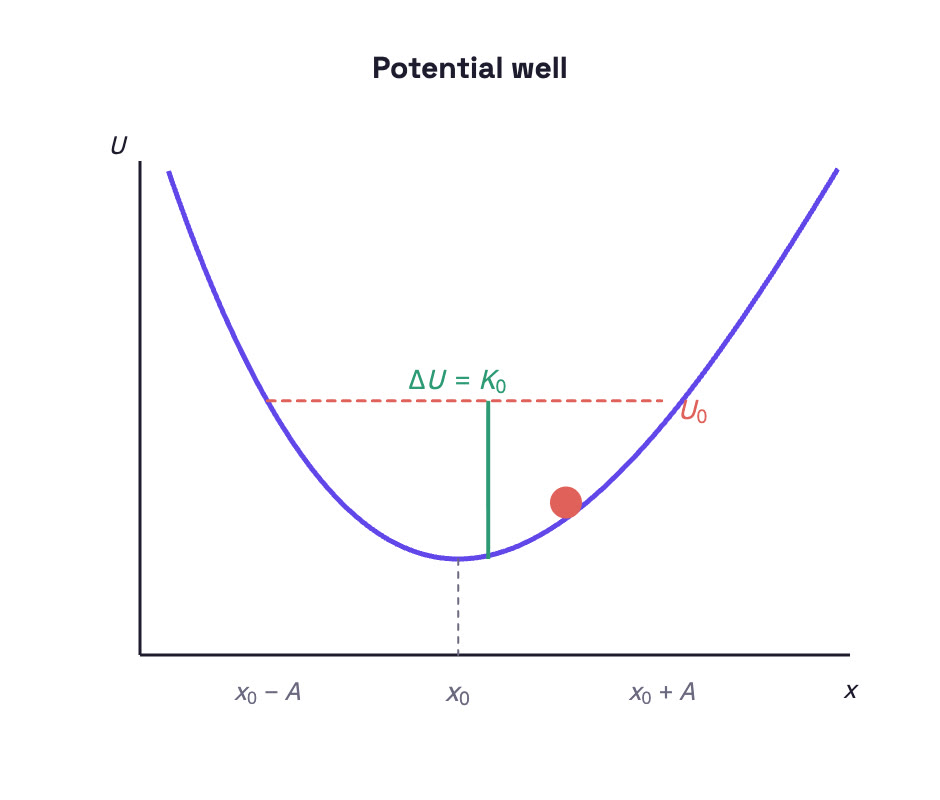
Energy in SHM: Potential Well, Kinetic and Potential Energy
Read a potential-energy well with F = −dU/dx, and write kinetic, potential and total energy of linear and angular SHM against displacement and time.
Potential well · F = −dU/dx · Kinetic and potential energy in SHM · Total energy ½kA² · Energy in angular SHM
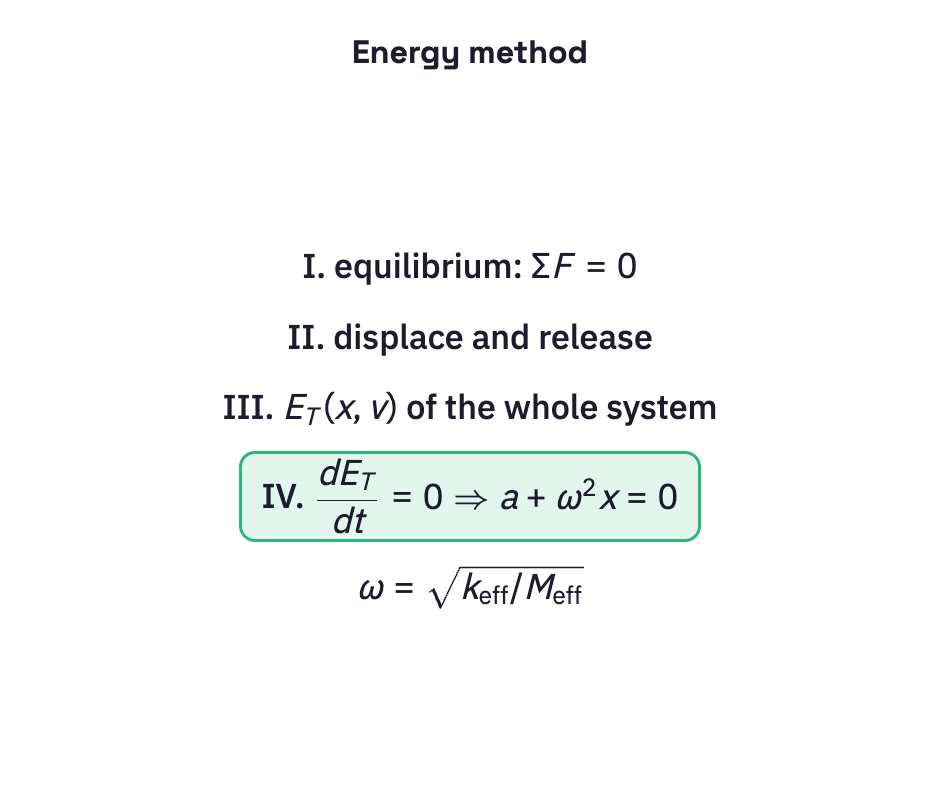
Energy Method to Find the Frequency: Pulleys and Rolling Bodies
Find ω by writing the total energy at a general position and setting dE/dt = 0, for spring-block systems, pulleys with moment of inertia and rolling cylinders on springs.
Energy method · Effective mass and effective k · Pulley with moment of inertia · Rolling body with springs
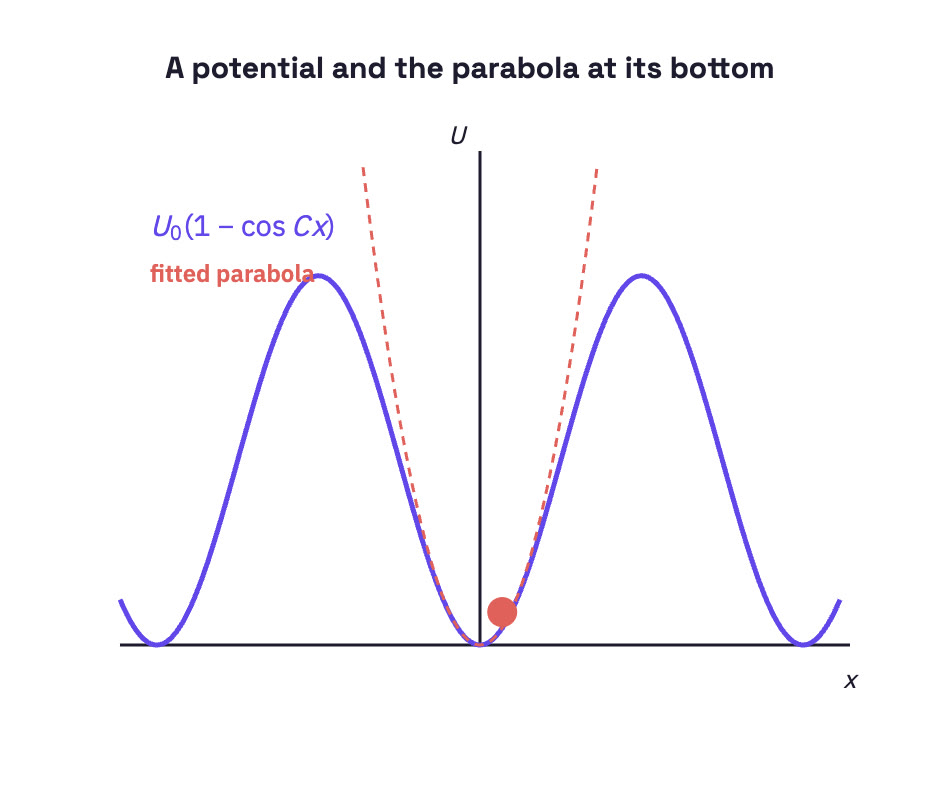
SHM in a Given Potential and Mean Kinetic Energy
Find the period of small oscillations in a given potential U(x) and of a bead-on-pulley system, and the mean kinetic energy over a period.
SHM in a potential U(x) · Bead on a pulley · Mean kinetic energy · Average energy over a period
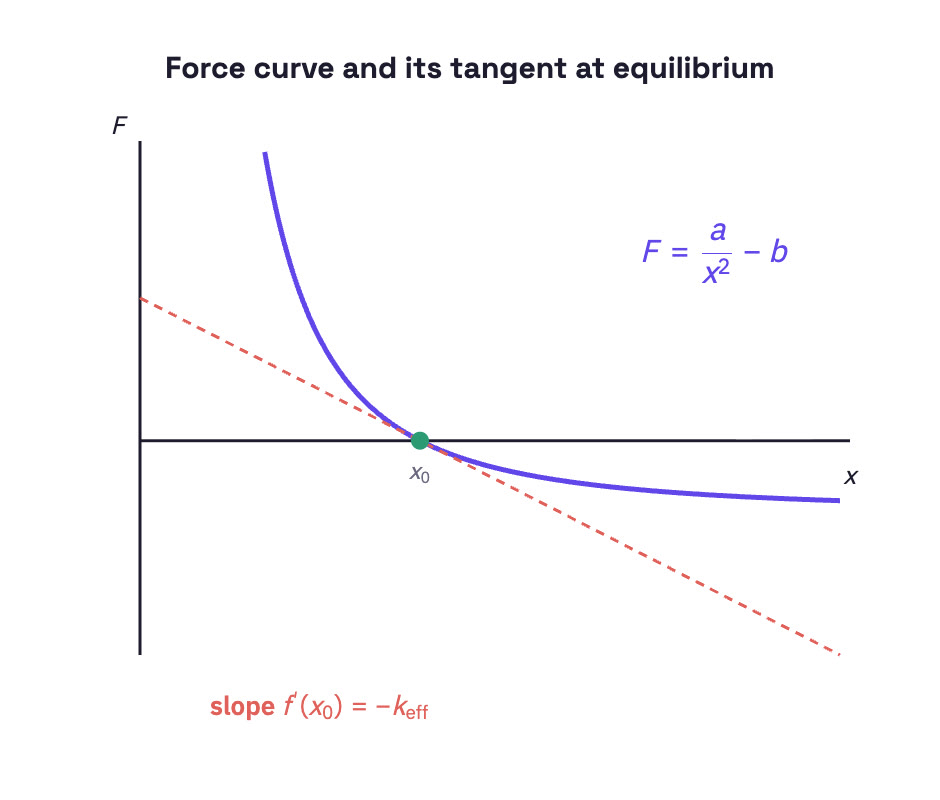
Taylor's Method: ω From the Force or Potential Function
Get ω of small oscillations from the slope f′(x₀) of the restoring force or U″(x₀), and apply it to a charge between charges, on a ring's axis and on a charged spring.
Taylor's method · ω = √(U″(x₀)/m) · Charge between two charges · Charge on a ring's axis · Charged balls on a spring
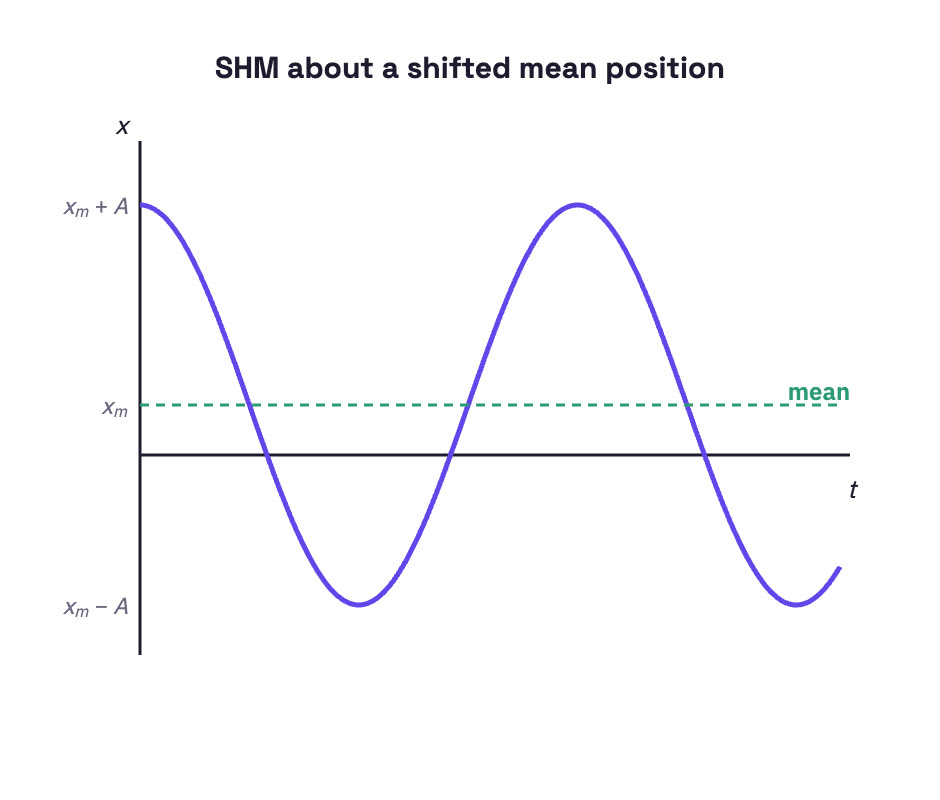
SHM About a Shifted Mean Position: Constant Forces and Lifts
Recognise d²y/dt² + ω²y = C as SHM about C/ω², and solve a constant force on a spring-block, a lift that starts or stops accelerating and a charged ball on a spring.
Shifted mean position · Constant force on a spring-block · Lifts that start or stop accelerating · Charged ball on a spring
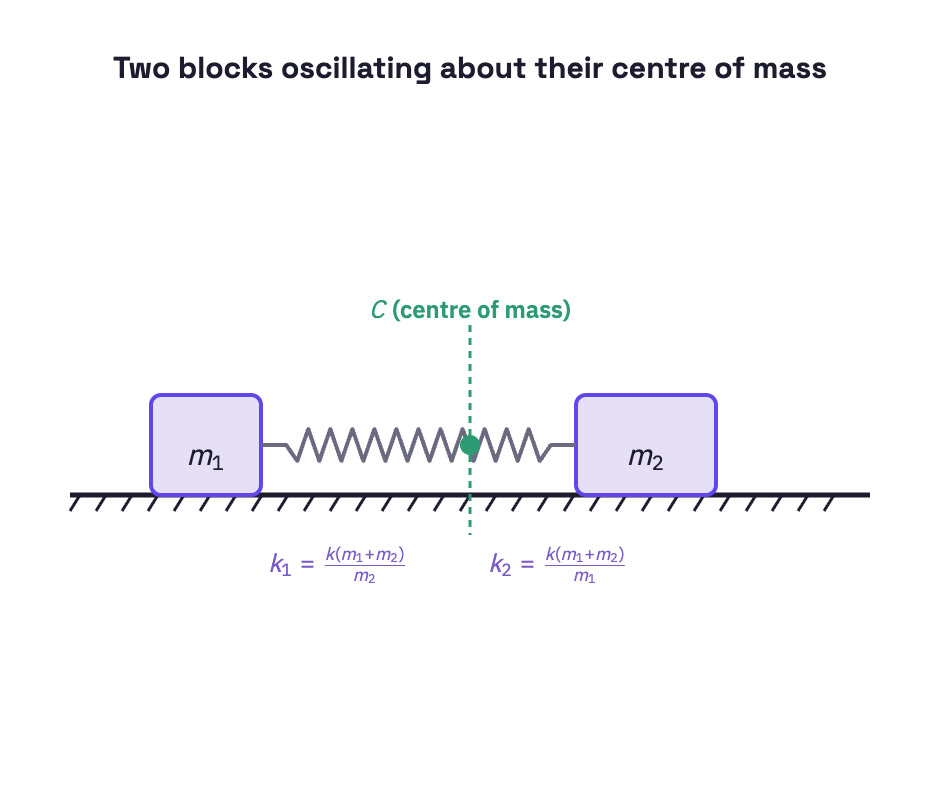
Two-Body Oscillations, the Bifilar Rod and the Tunnel Through the Earth
Use reduced mass for two blocks joined by a spring, find the period of a rod twisted on two strings, and show that a ball dropped into a tunnel through the Earth moves in SHM with an 84-minute period.
Reduced mass · Two blocks and a spring · Bifilar suspension · Tunnel through the Earth