 layrd.liveLayer by Layer
Electric Flux and Gauss's Law
Ten connected videos on flux and Gauss's law: flux through any surface, Gauss's law and symmetry, conductors, shells and earthing, the fields of lines, spheres, cylinders, sheets and plates, electrostatic pressure, solid angle, and cavities by superposition. Each part has worked examples on its page; the formula sheet, revision sheet and practice set cover the whole chapter.
Learning path · Formula sheet · Practice set
Print and revise: Revision sheet (PDF) · Formula sheet (PDF, one page)
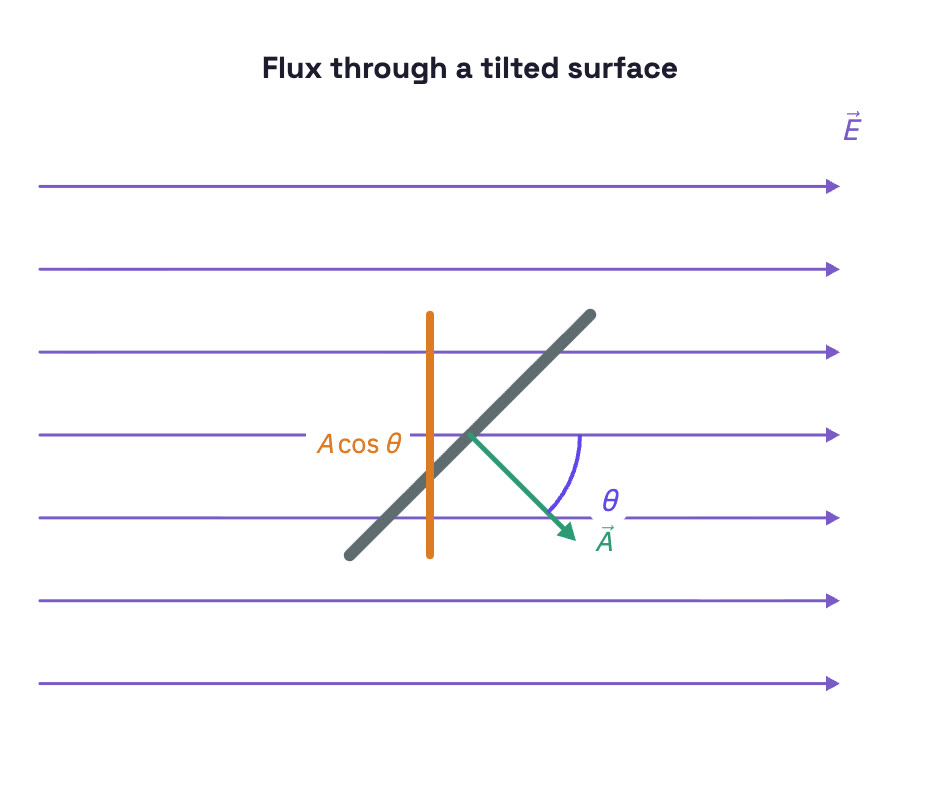
Electric Flux: Area Vector, Curved Surfaces and Integration
Find the flux of a uniform field through flat, tilted, curved and closed surfaces with the area vector and projected areas, and integrate the flux of a non-uniform field.
Electric flux and the area vector · Flux through a tilted surface · Flux through curved surfaces by projection · Zero net flux of a uniform field · Flux of a non-uniform field
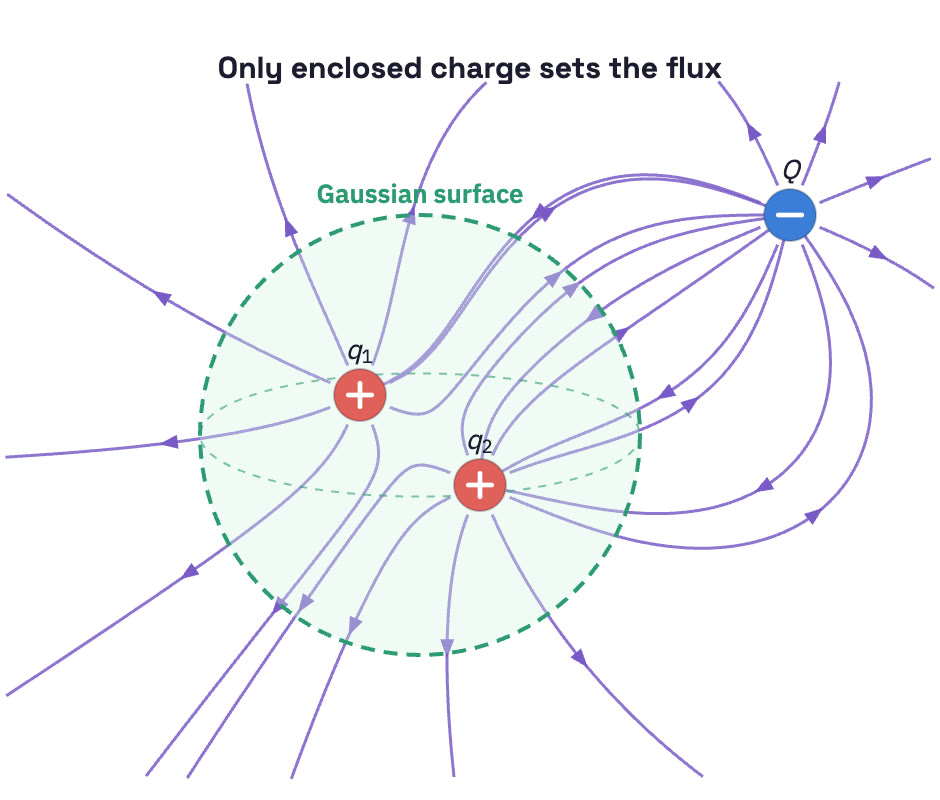
Gauss's Law: Enclosed Charge and Flux by Symmetry
State Gauss's law and what it does and doesn't say, find the flux in a dielectric, find the enclosed charge from a given field, and split flux between faces by symmetry.
Gauss's law · Gaussian surface · Flux in a dielectric · Charge enclosed from a given field · Charge at a cube's centre, corner and edge
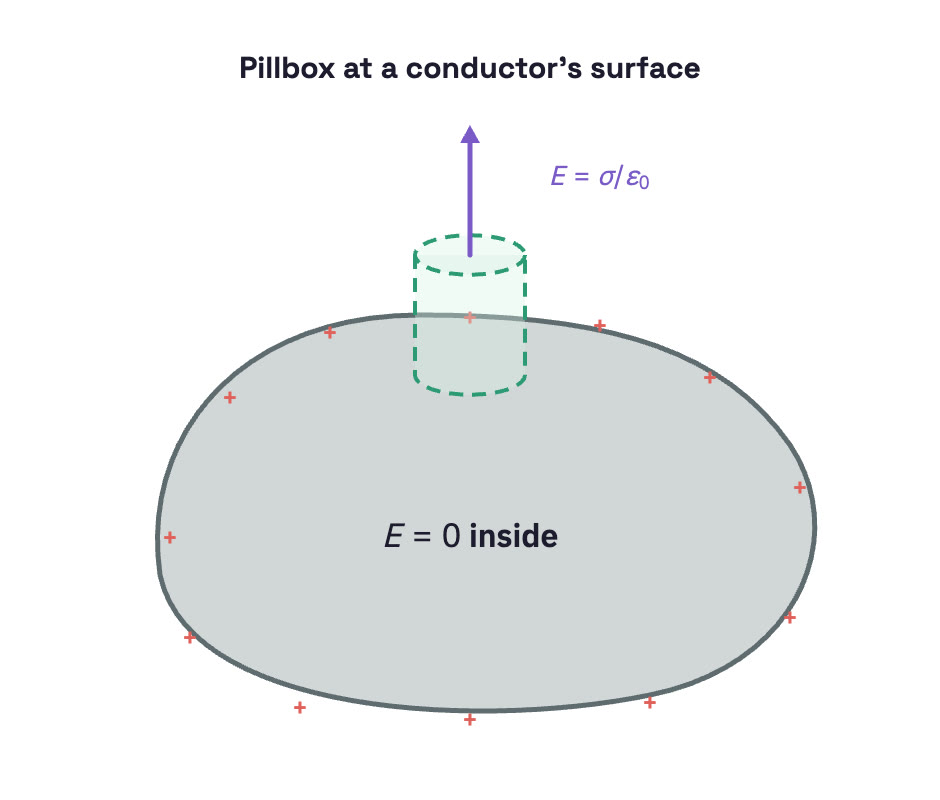
Conductors, Charged Shells and Charge in a Cavity
Show that the field inside a conductor is zero and σ/ε₀ just outside, find the field of a charged sphere and shell, and find the induced charges when a charge sits in a cavity.
Field inside a conductor · Field at a conductor's surface · Charged conducting sphere and shell · Induced charges in a cavity · Electrostatic shielding
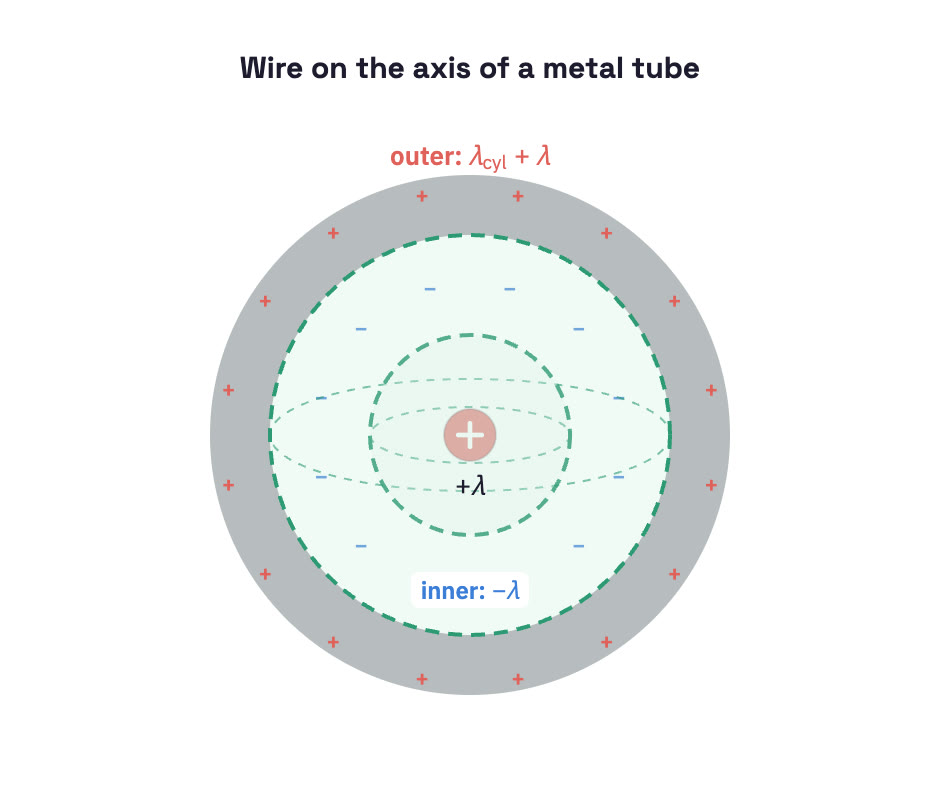
Coaxial and Concentric Conductors: Connecting and Earthing
Find the charges and fields of a coaxial wire and cylinder and of concentric shells, and what happens when shells are connected or earthed.
Coaxial wire and cylinder · Concentric shells · Connecting conductors · Earthing a shell
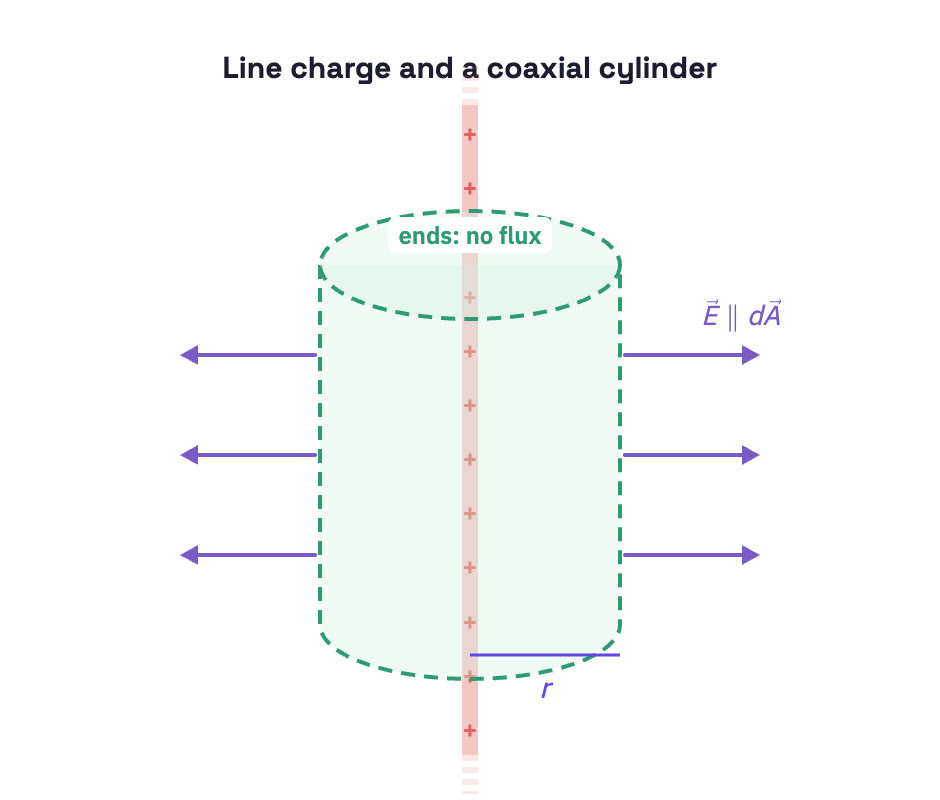
Gauss's Law for a Line, a Solid Sphere and a Cylinder
Choose the Gaussian surface from the symmetry and derive the field of an infinite line charge, a uniformly charged solid sphere and a long solid cylinder, inside and outside.
Choosing the Gaussian surface · Field of an infinite line charge · Field of a uniformly charged sphere · Non-uniform charge density · Field of a long charged cylinder
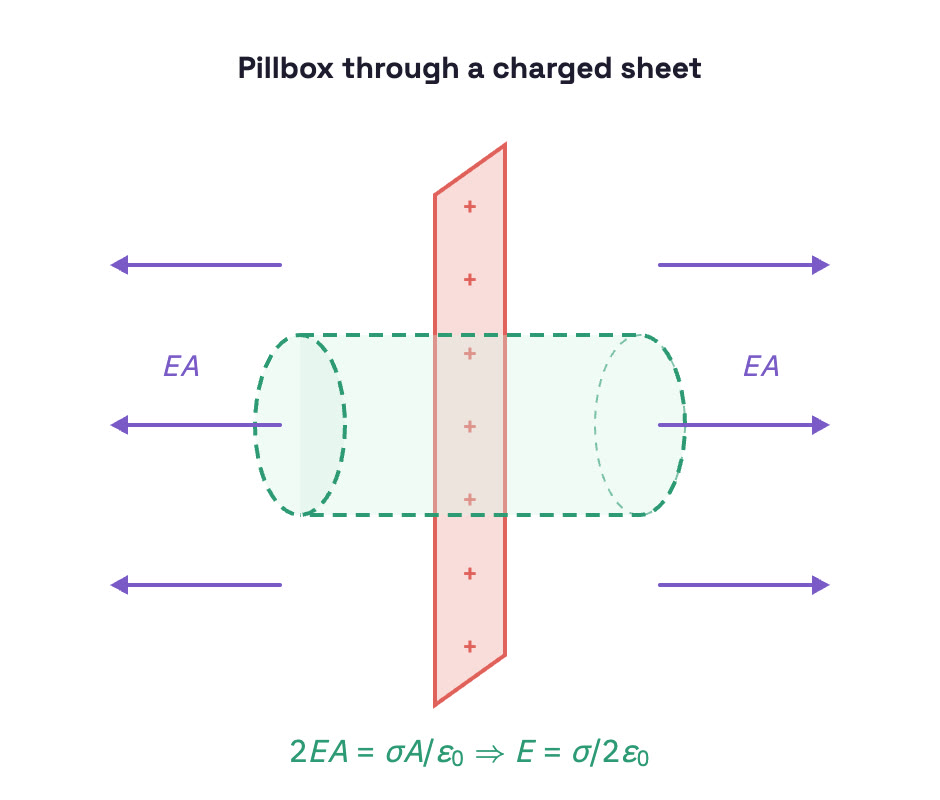
Charged Sheets and Conducting Plates
Derive the field of an infinite sheet of charge and find how charge spreads over an isolated conducting plate, alone and in an external field.
Field of an infinite sheet · Sheet vs conductor surface · Isolated conducting plate · Plate in an external field
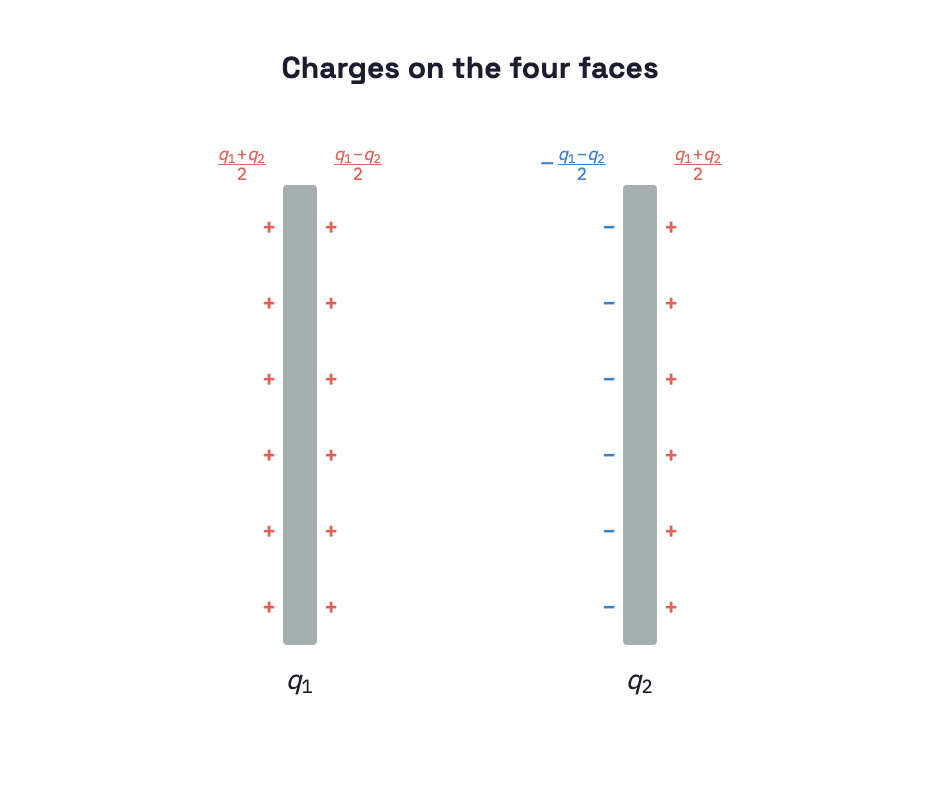
Parallel Conducting Plates, Earthing and Thick Slabs
Find the charge on every face of several parallel plates and the fields between them, what earthing a plate does, and the field of a thick slab of charge.
Charges on the faces of parallel plates · Fields between plates · Earthing a plate · Field of a thick slab
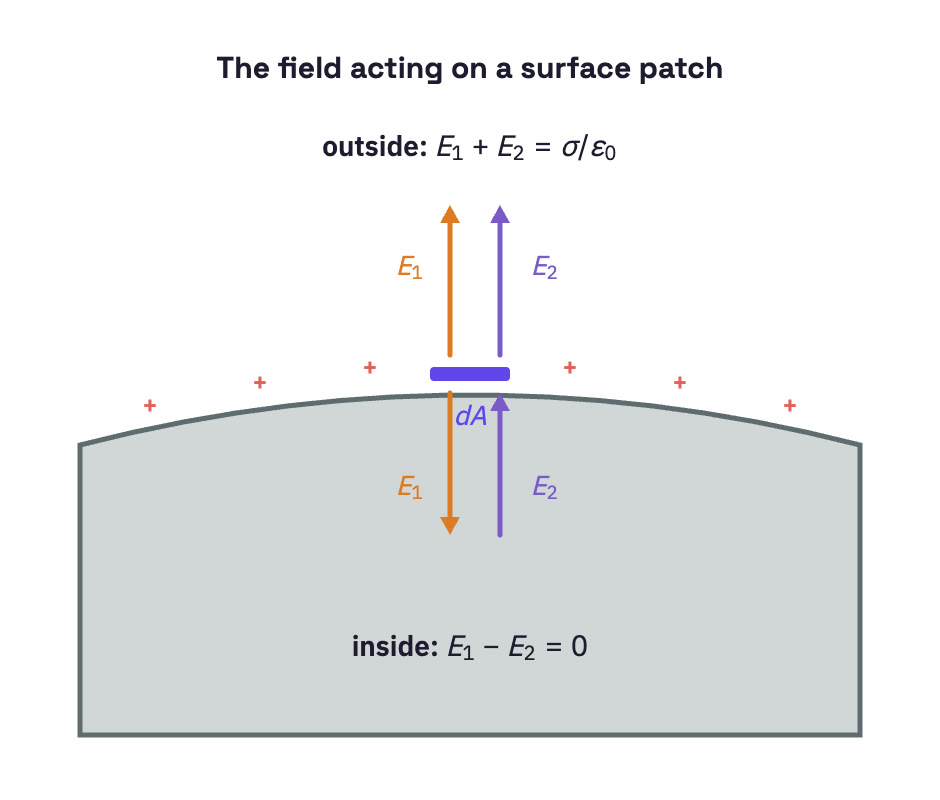
Electrostatic Pressure: Force on a Charged Surface
Derive the outward pressure σ²/2ε₀ on a charged conductor's surface, the force between the halves of a charged sphere, and apply it to shells and bubbles.
Electrostatic pressure · Field acting on a surface element · Force between hemispheres · Charged soap bubble
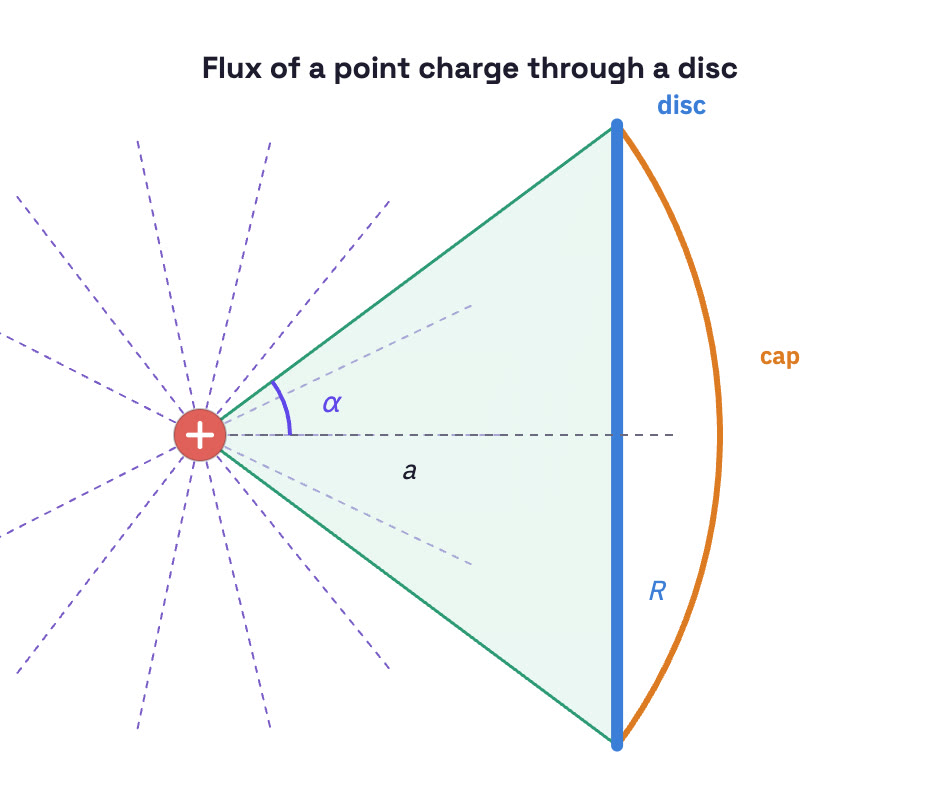
Solid Angle and the Flux of a Point Charge
Define solid angle, derive Ω = 2π(1 − cos α) for a cone, and find the flux of a point charge through a disc or part of a surface.
Solid angle and the steradian · Solid angle of a cone · Flux through a disc · Flux through part of a surface
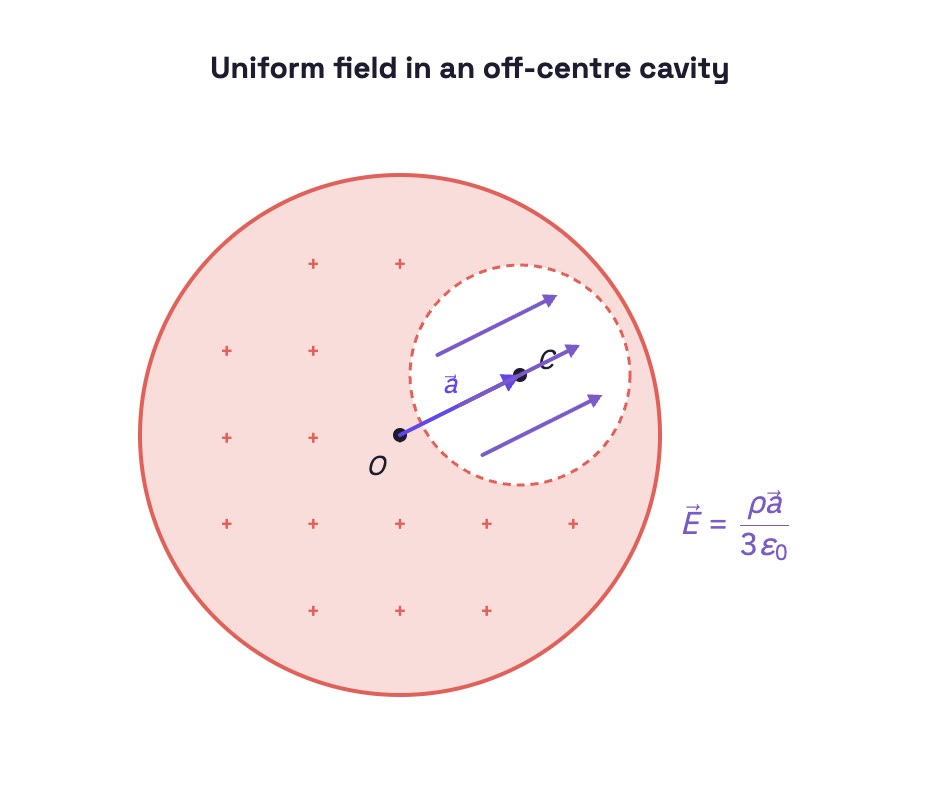
Cavities and Superposition: Uniform Field Inside a Cavity
Use superposition to show the field in a spherical cavity or cylindrical tunnel is uniform, find the field outside, and the oscillation through a tunnel in a charged sphere.
Spherical cavity in a charged sphere · Cylindrical tunnel · Field outside a cavity · Oscillation through a tunnel