 layrd.liveLayer by Layer
Heat Transfer
Fourteen connected videos that build heat transfer layer by layer: conduction through rods and networks, conduction with changing area and time, convection, then radiation from Prevost and Kirchhoff to Stefan, Newton's law of cooling, Wien and Planck. Every subtopic has a worked example in the video and on its page; the formula sheet, revision sheet and practice set cover the whole chapter.
Learning path · Formula sheet · Practice set
Print and revise: Revision sheet (PDF) · Formula sheet (PDF, one page)
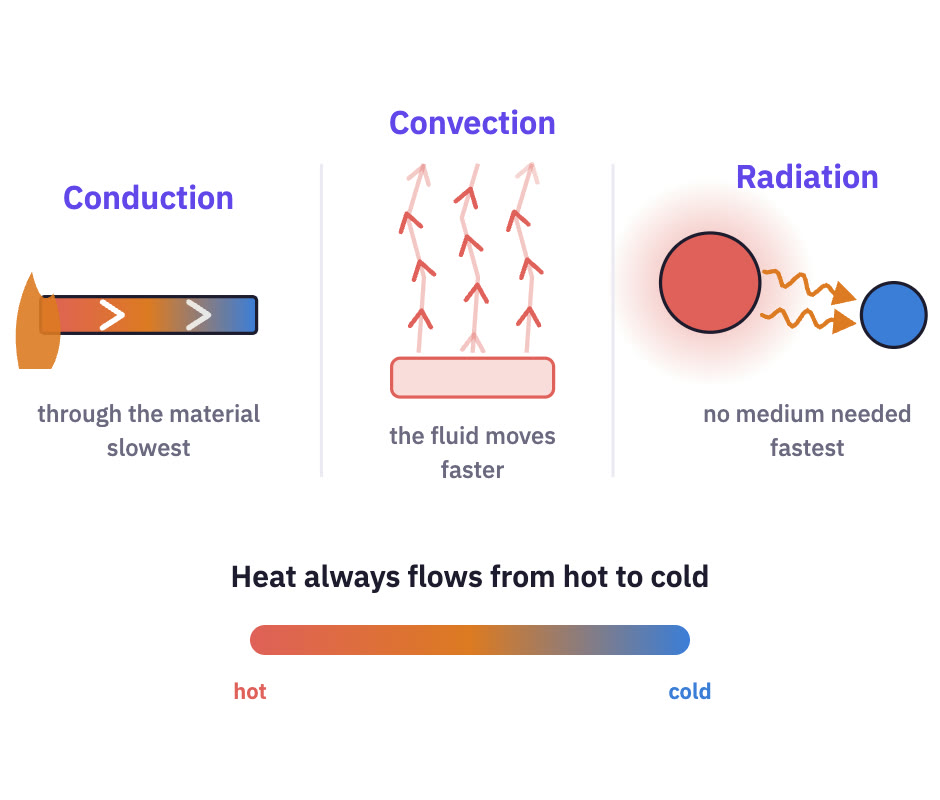
Heat Conduction: Mechanism and Steady State
Tell conduction, convection and radiation apart, explain how heat moves through a solid, and use the linear temperature profile of a rod in steady state.
Three modes of heat transfer · Mechanism of conduction · Variable state and steady state · Linear temperature profile
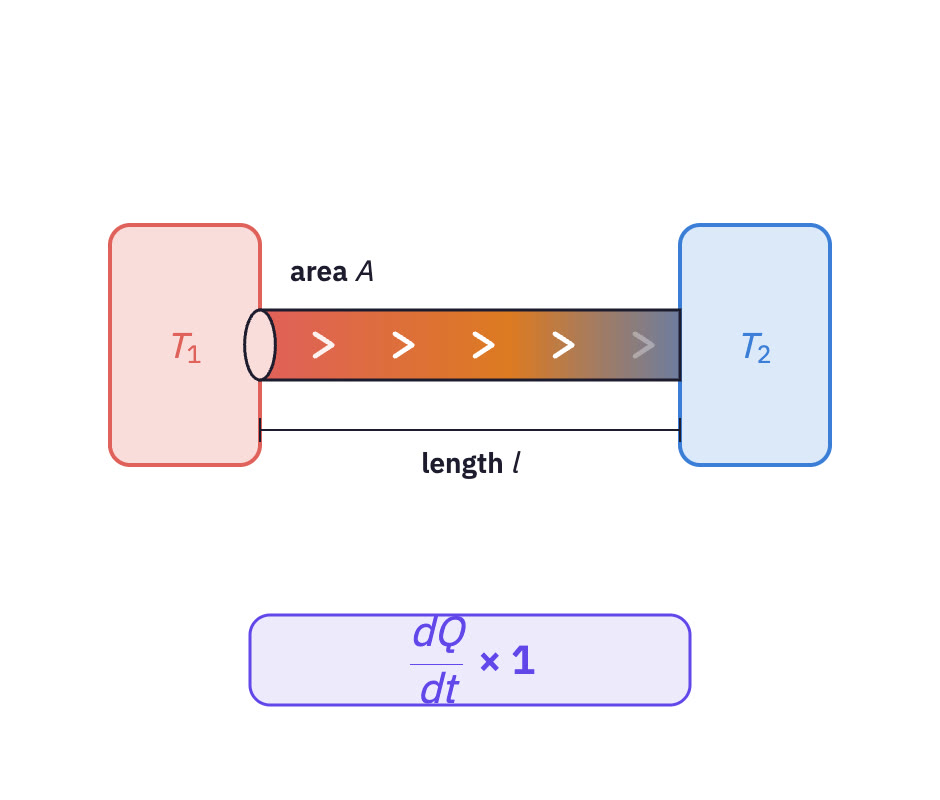
Law of Heat Conduction and Thermal Conductivity
Build dQ/dt = kA(T₁ − T₂)/l, use it to find heat flow, temperatures and k, and see how a rod warms before it reaches steady state.
Fourier's law dQ/dt = kAΔT/l · Thermal conductivity k · Heat flow before steady state
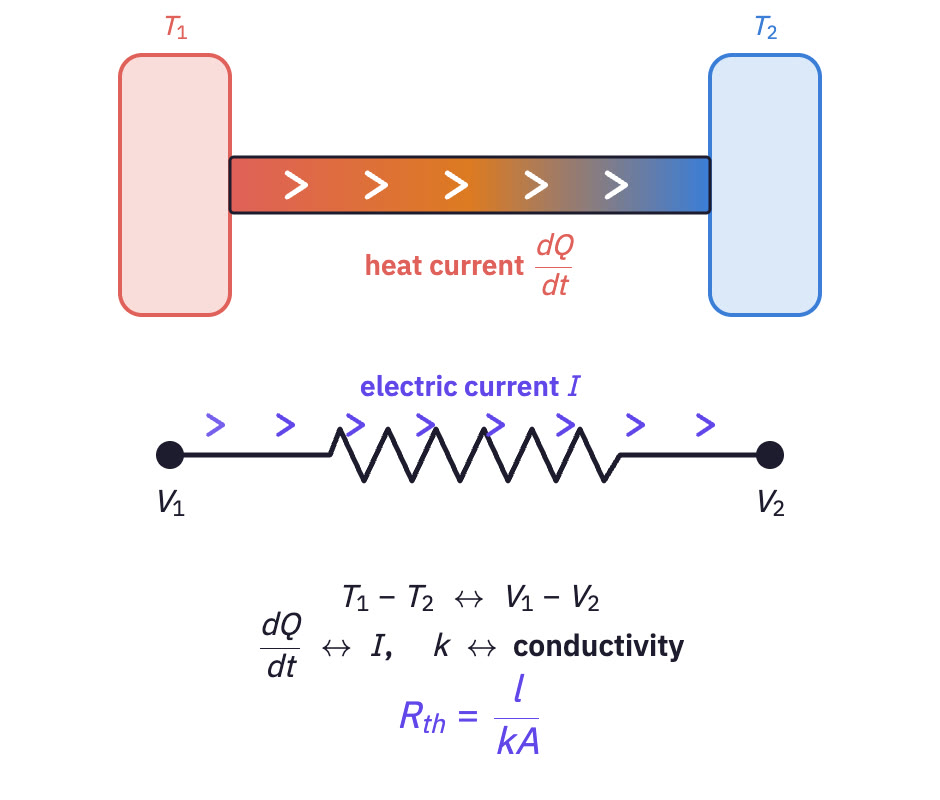
Thermal Resistance and Rods in Series
Treat a rod as a thermal resistor R = l/(kA), then find junction temperatures, heat currents and the equivalent conductivity of rods joined end to end.
Thermal resistance R = l/(kA) · Thermal Ohm's law · Junction temperature · Equivalent conductivity in series
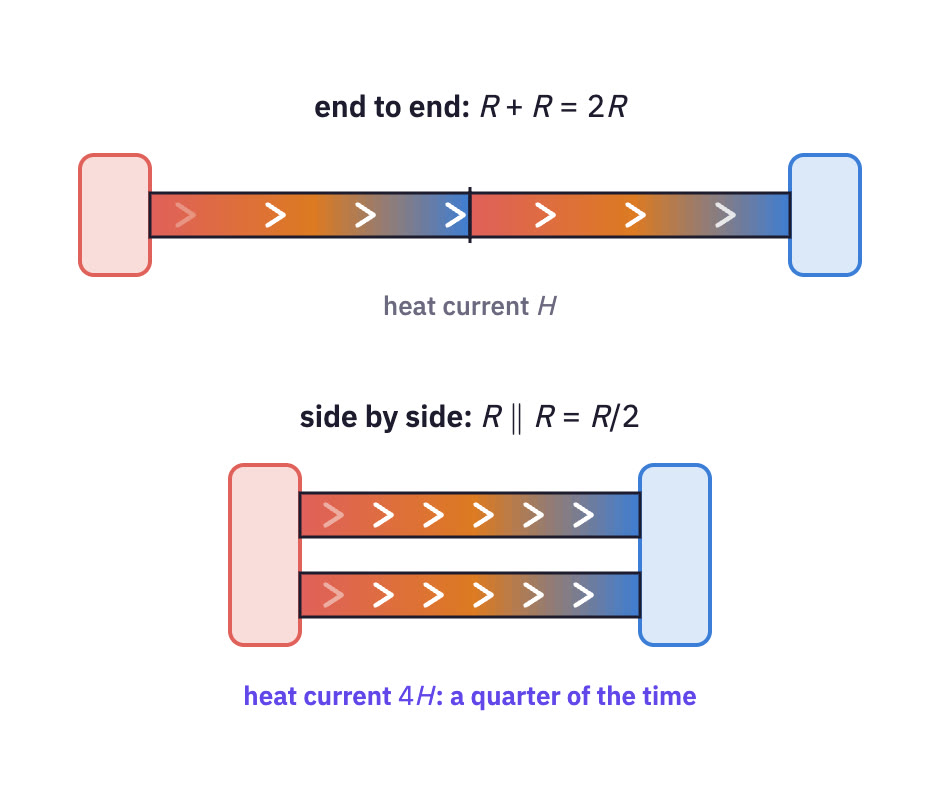
Rods in Parallel and Networks of Rods
Combine rods side by side, then solve any network of rods with the junction rule: heat in equals heat out at every junction in steady state.
Rods in parallel · Junction rule for heat currents · Symmetric and bridge networks · Heat source in an enclosure
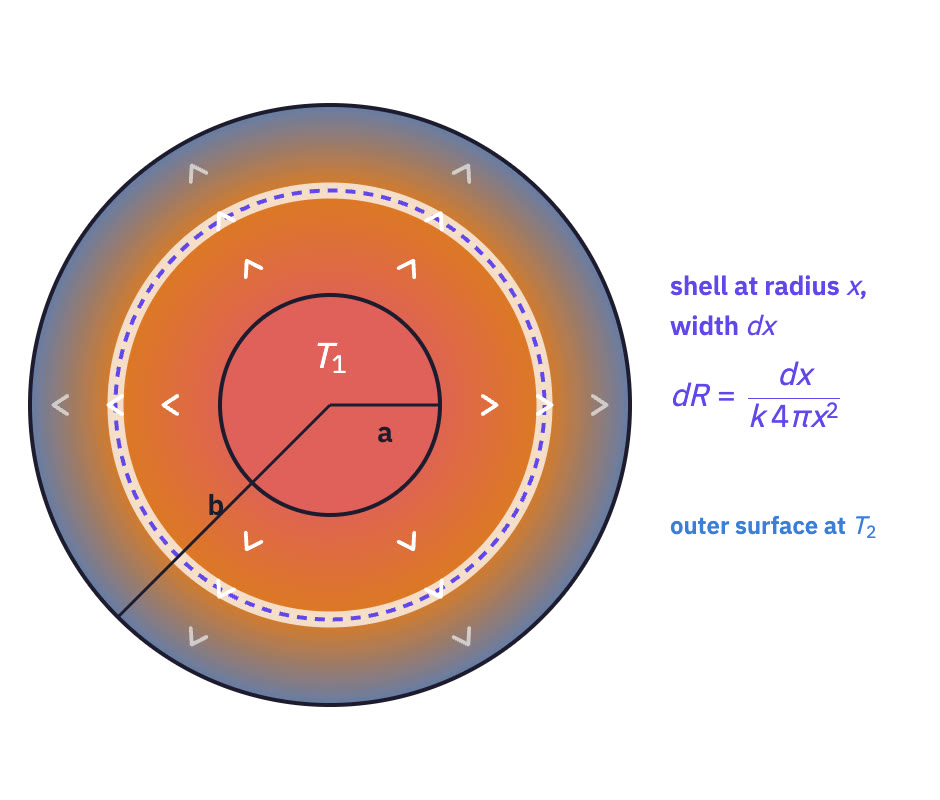
Radial Conduction and the Growing Ice Layer
Integrate dR = dx/(kA) for spherical and cylindrical shells and a frustum, and show why an ice layer on a pond takes time ∝ thickness².
R = ∫dx/(kA) · Spherical and cylindrical shells · Frustum of a cone · Ice layer growth t ∝ x²
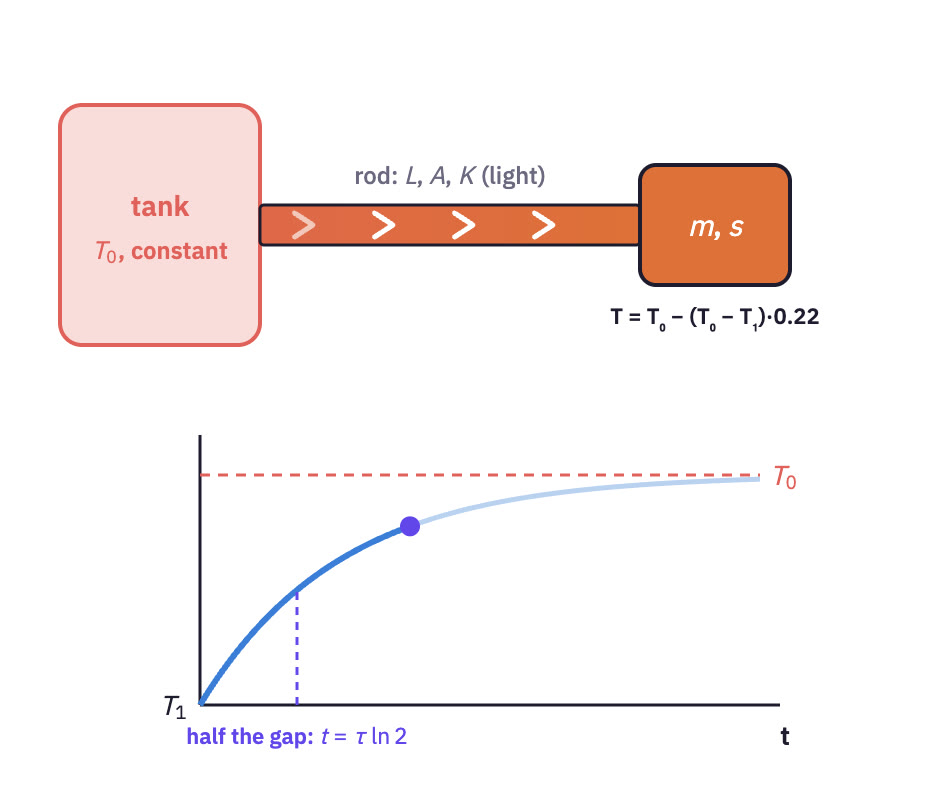
Bodies Heated or Cooled Through a Rod
Model a body joined by a rod to a tank, two bodies joined by a rod, and a gas cooling through its walls: each temperature approaches its final value exponentially.
Quasi-steady rod · Exponential approach to equilibrium · Time constant = heat capacity × resistance
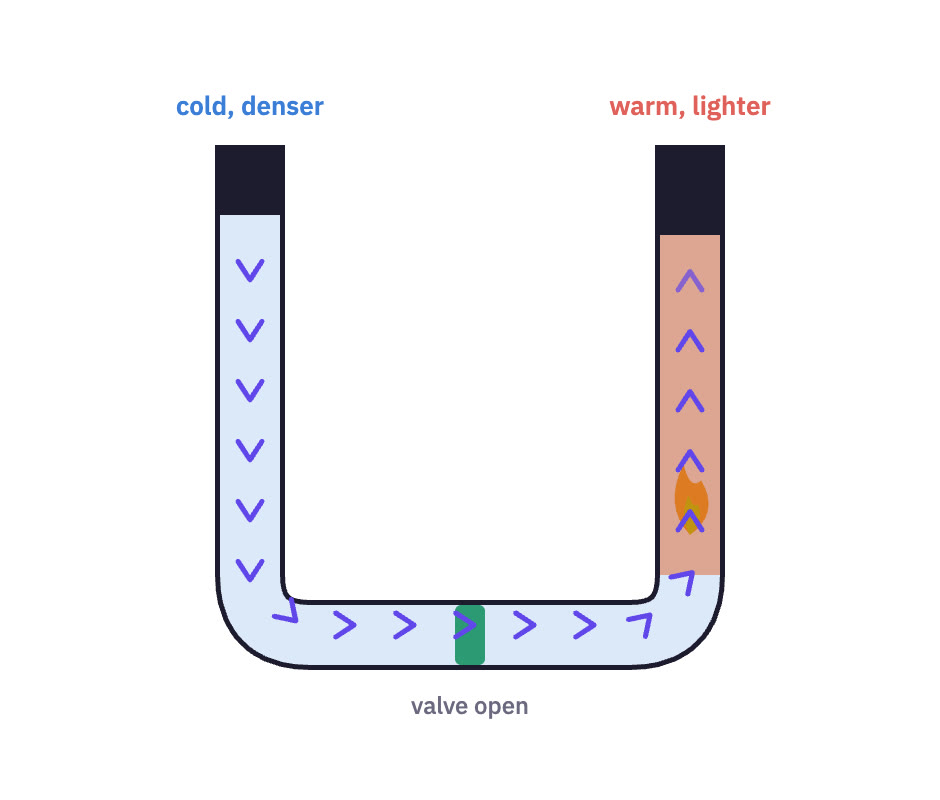
Convection of Heat
Explain natural and forced convection, use dQ/dt = hAΔT, and spot convection in weather, the body and home heating.
Natural and forced convection · Convection coefficient h · Convection in everyday systems
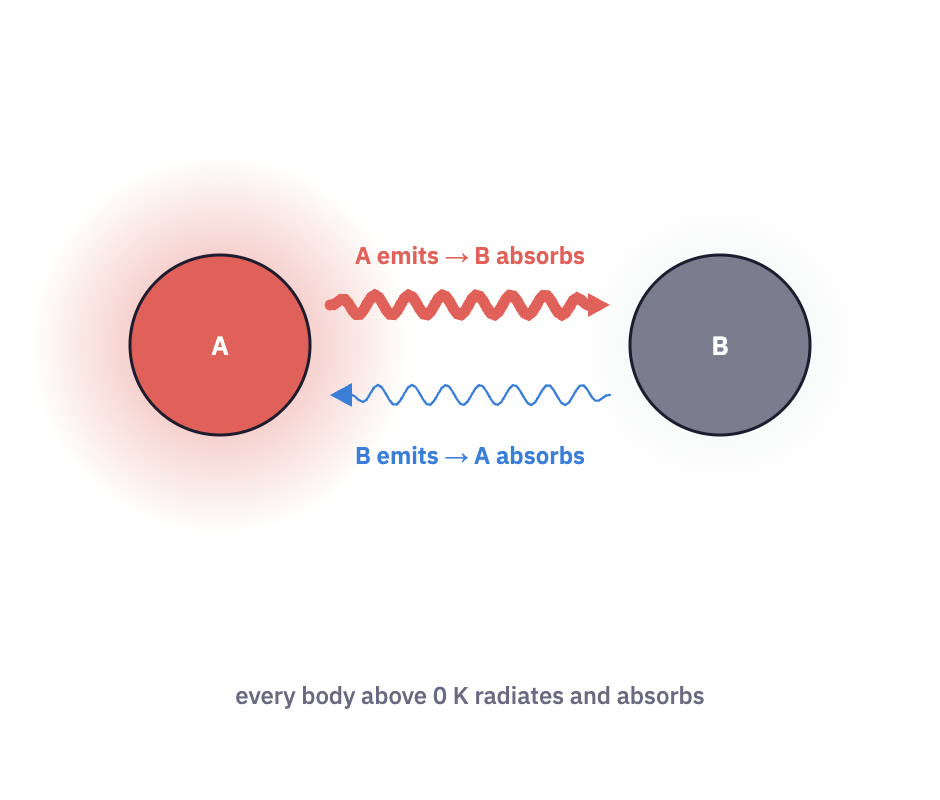
Thermal Radiation, Prevost's Theory and Kirchhoff's Law
Describe thermal radiation and Prevost's exchange theory, split incident energy into reflected, absorbed and transmitted parts, and use Kirchhoff's law e = a and the black body.
Thermal radiation · Prevost's theory · Absorptivity and emissivity · Kirchhoff's law · Black body
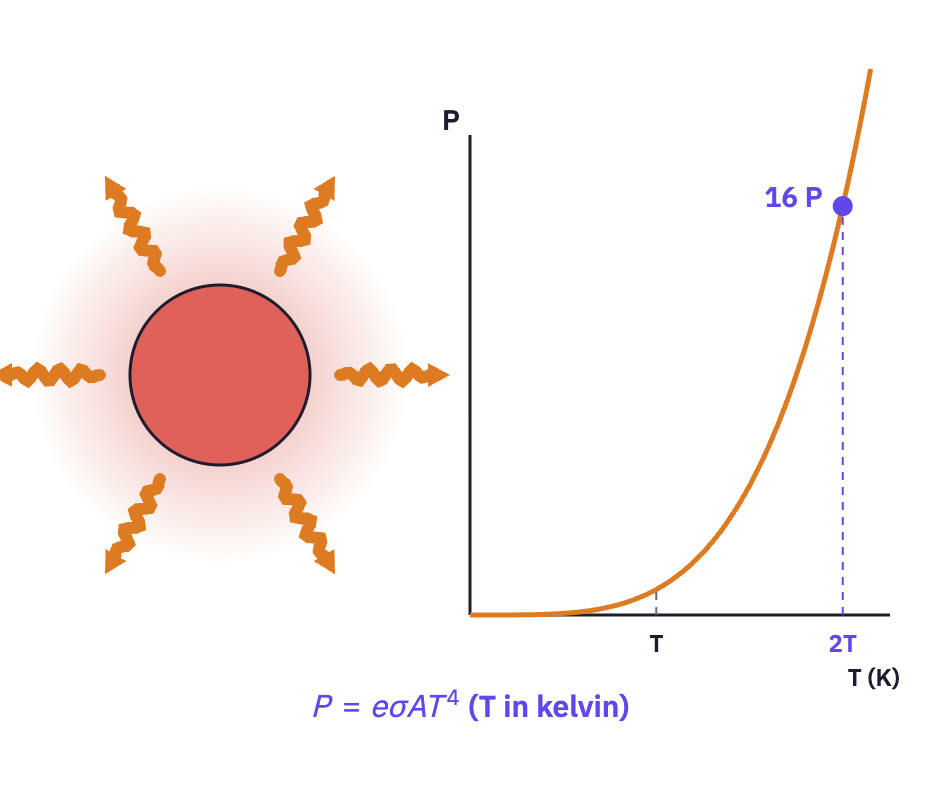
Stefan–Boltzmann Law and Net Radiation
Use P = eσAT⁴, the net exchange eσA(T⁴ − Ts⁴) with the surroundings, and the rate of cooling dT/dt.
Stefan–Boltzmann law P = eσAT⁴ · Net radiation with surroundings · Rate of cooling ∝ A/m
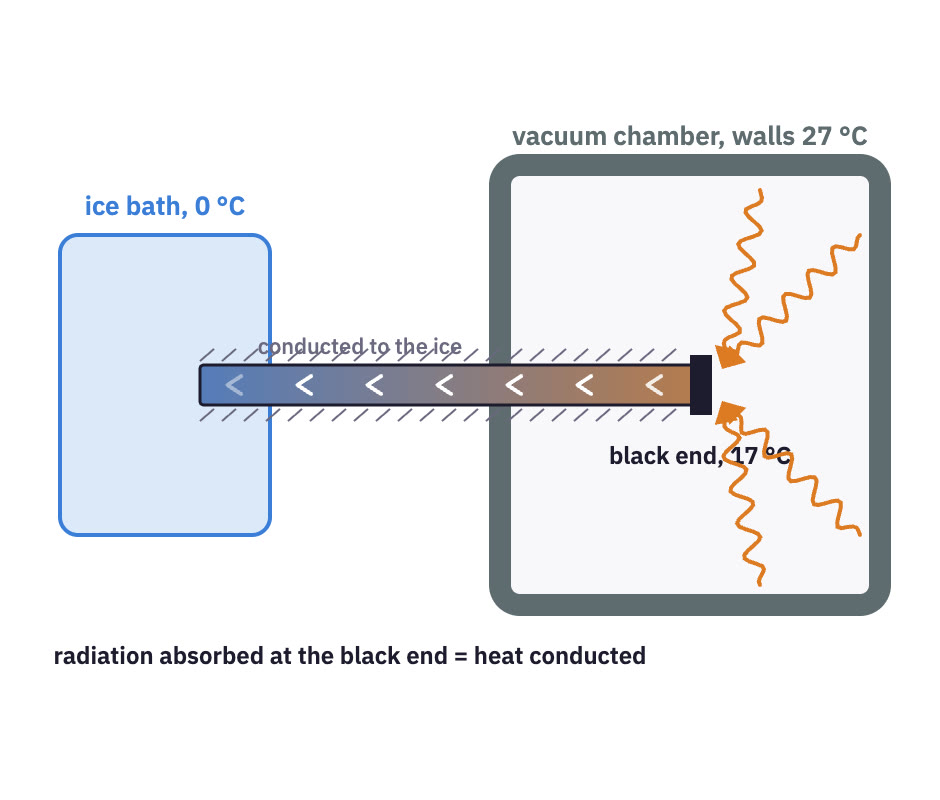
Radiation with Conduction, and the Solar Constant
Balance conduction against radiation in steady state, and estimate the Sun's surface temperature from the solar constant and its angular size.
Conduction and radiation in steady state · Solar constant · Sun's surface temperature
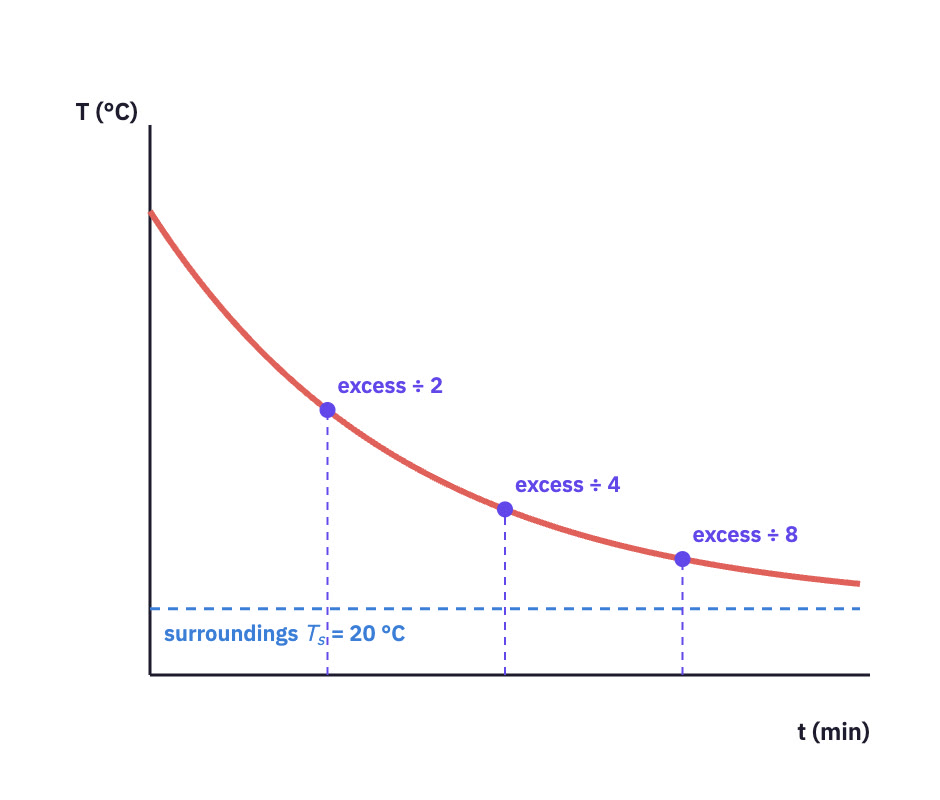
Newton's Law of Cooling
Derive Newton's law of cooling from Stefan's law for small temperature differences, then use its exact and average forms to find times and temperatures.
Newton's law of cooling · Exponential cooling · Average form of Newton's law
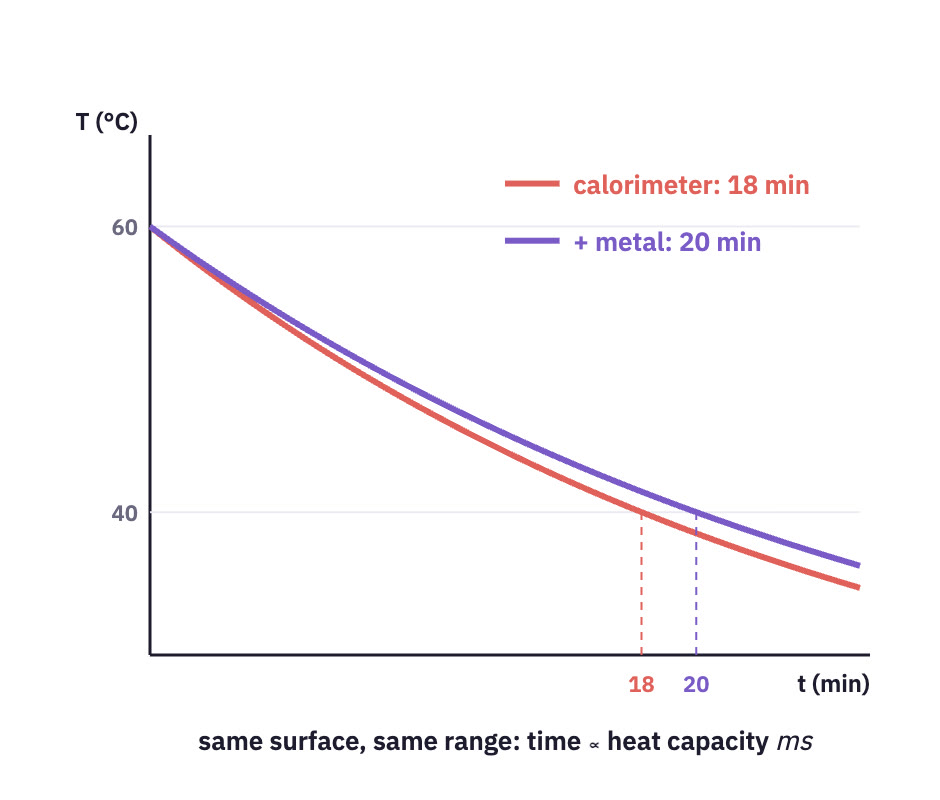
Comparing Cooling Bodies: Specific Heat and Steady Temperature
Compare cooling times through heat capacity, find a specific heat by the method of cooling, and find the steady temperature a heater maintains.
Cooling time ∝ heat capacity · Method of cooling · Steady temperature with a heater
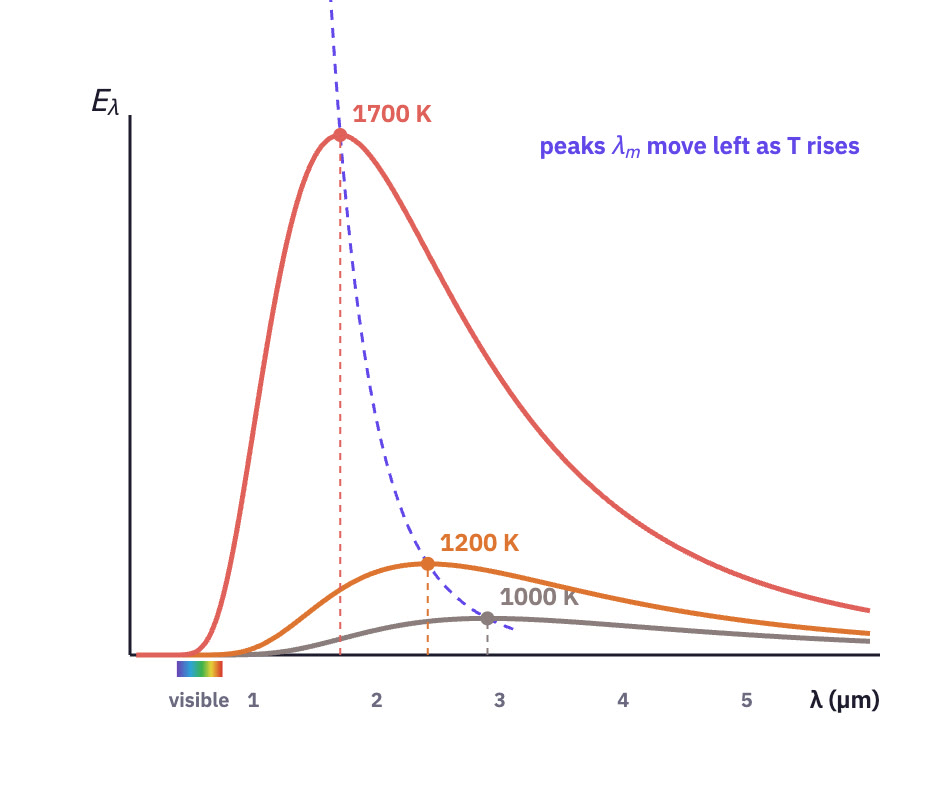
Black-Body Spectrum and Wien's Law
Read the black-body curves, use Wien's displacement law λm T = b to find temperatures and peak wavelengths, and compare peak heights with the fifth-power law.
Spectral emittance E_λ · Wien's displacement law · Wien's fifth power law
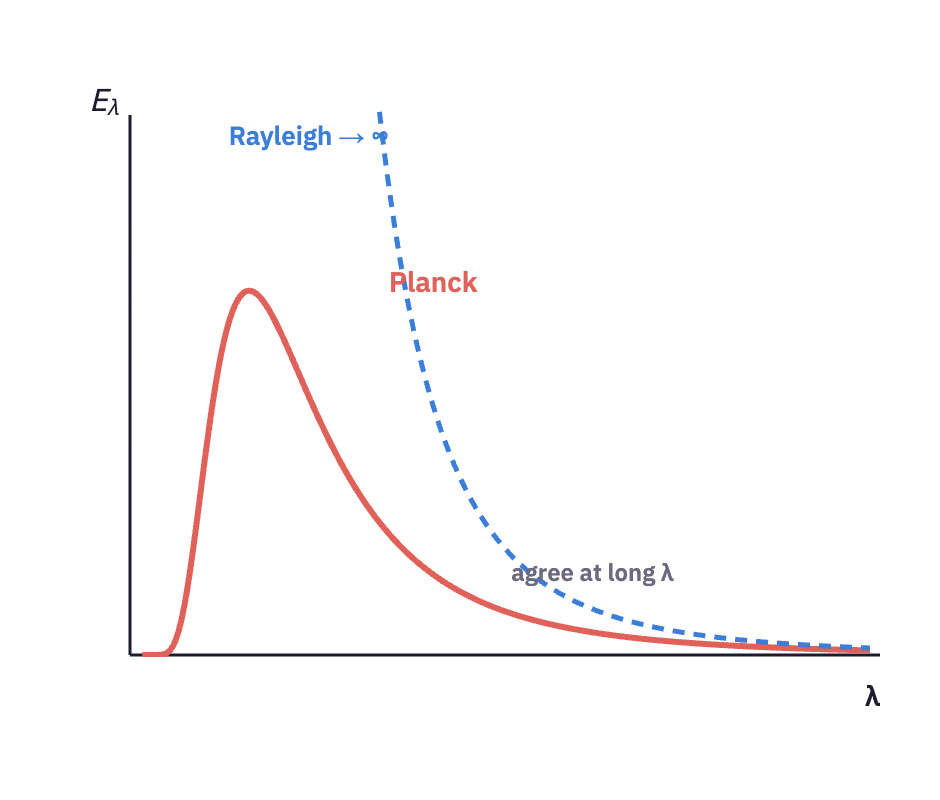
Planck's Law and Kirchhoff's Law in Action
See how Planck's law fits the whole black-body curve and contains the Rayleigh, Wien and Stefan results, then explain deserts, Fraunhofer lines and glowing glass with Kirchhoff's law.
Planck's radiation law · Rayleigh's formula · Fraunhofer lines · Applications of Kirchhoff's law