 layrd.liveLayer by Layer
- 1. Inductive Effect
- 2. Carboxylic Acid Strength
- 3. Alcohols, Hydrocarbons, Amines
- 4. Electromeric & Mesomeric
- 5. Hyperconjugation
- 6. Fission & Free Radicals
- 7. Carbocations
- 8. Carbanions
- 9. Carbenes
- 10. Nitrenes & Benzyne
- 11. Electrophiles & Nucleophiles
- 12. Reaction Types
- 13. Free Radical Substitution
- 14. SN2 Reaction
- 15. SN1 Reaction
- 16. SN1 vs SN2
- 17. Electrophilic Substitution
- 18. Markovnikov's Rule
- 19. Br₂ Addition & Dienes
- 20. Peroxide Effect
- 21. Nucleophilic Addition
- 22. E1, E1cB & Saytzeff
- 23. E2 Elimination
Carbenes: Singlet, Triplet and Their Reactions
A carbene is a neutral carbon with only two bonds and two non-bonded electrons: six outer electrons, no charge. Made from diazo compounds, ketene, or by α-elimination of chloroform, carbenes exist as singlets (paired, bent, reactive) and triplets (unpaired, more stable). They add to C=C, insert into C–H bonds, expand rings, and are the key intermediate in the carbylamine and Reimer–Tiemann reactions.
Builds on: Part 8 · Carbanions: Structure and Stability.
 Video coming soon
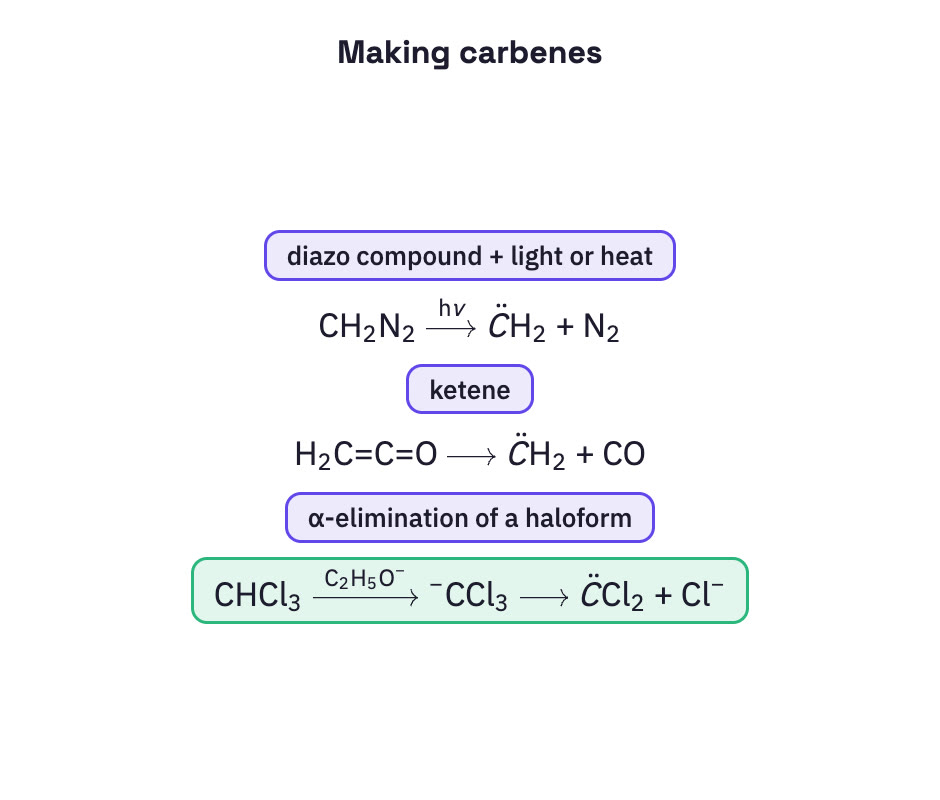
Making carbenes
; ; (α-elimination).
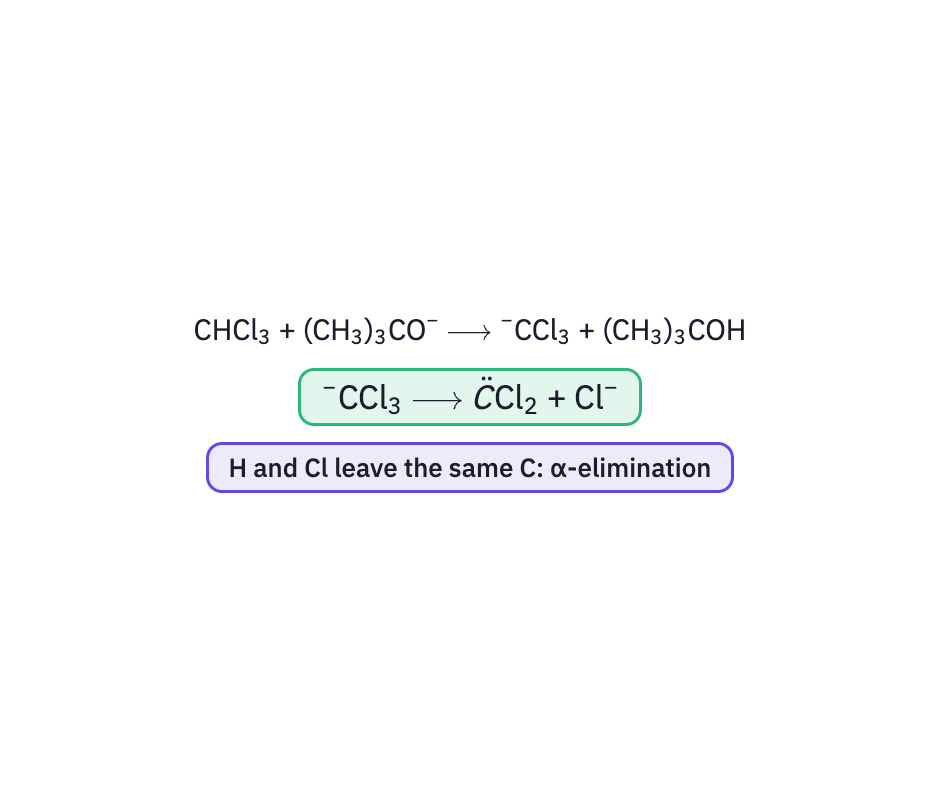
α-Elimination of chloroform
tert-Butoxide removes the acidic H to give , which loses . Both groups leave the same carbon.
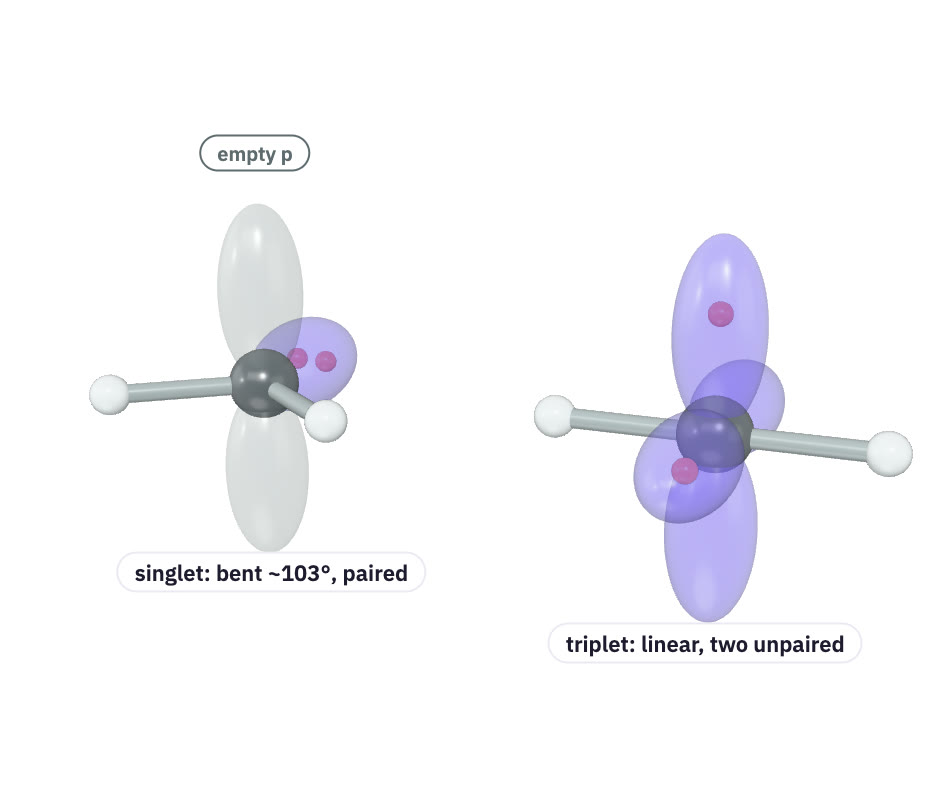
Singlet vs triplet carbene
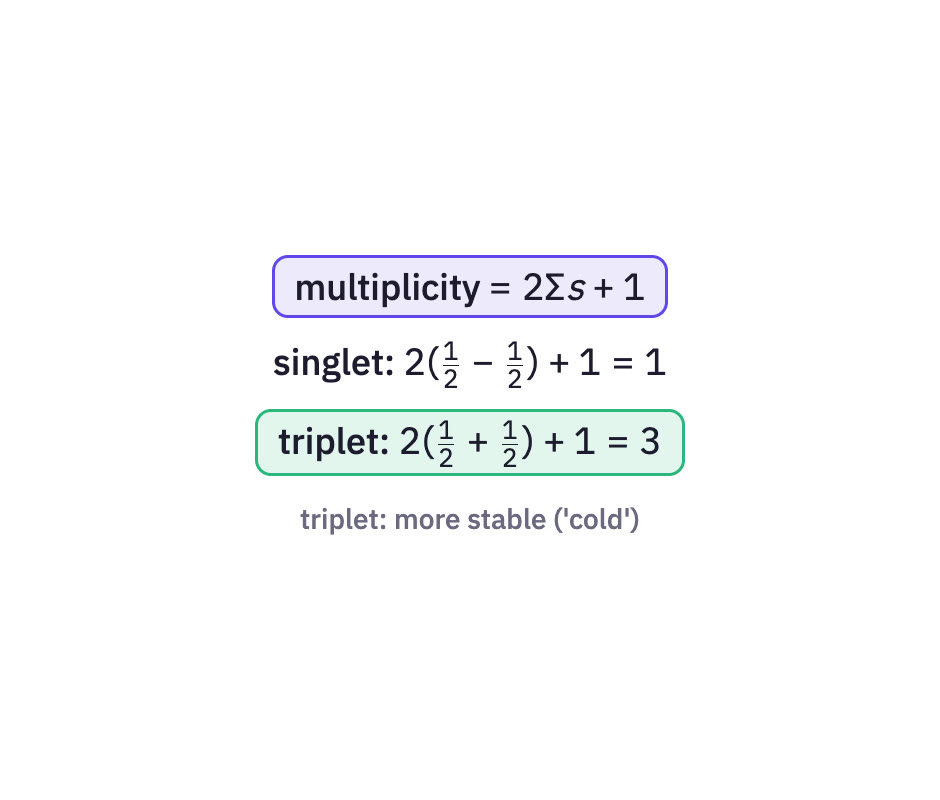
Singlet: both electrons paired in an sp² orbital, empty p, bent (H–C–H ≈ 103°, C–H 1.12 Å), more reactive ('hot'). Triplet: two unpaired electrons in different orbitals, a diradical, more stable ('cold'); the book's model is sp and linear (C–H 1.03 Å), though the measured angle is about 136°.
Multiplicity
Singlet: . Triplet: . Halogens stabilise the singlet: :CF₂ > :CCl₂ > :CBr₂ > :CI₂ (the book's p. 195 list, which puts :CH₂ first, contradicts its own answer key).
Addition, insertion, ring expansion
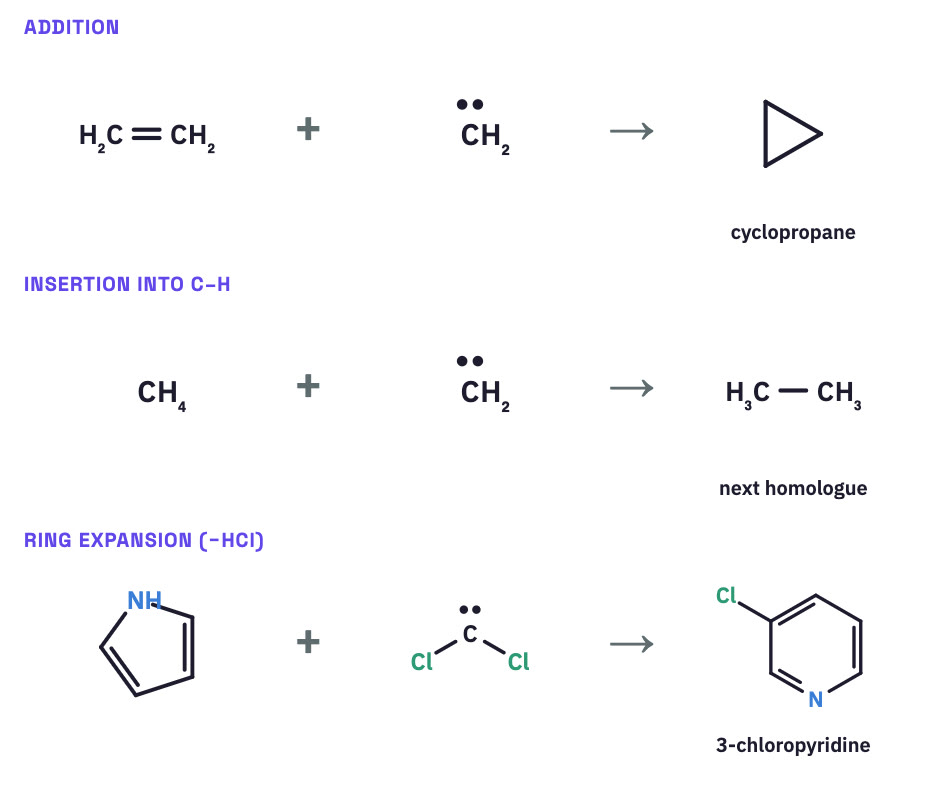
Ethene + :CH₂ → cyclopropane; CH₄ + :CH₂ → CH₃CH₃ (insertion into any C–H, so propane gives n-butane and isobutane); pyrrole + :CCl₂ → 3-chloropyridine (−HCl).
Methylene and butane
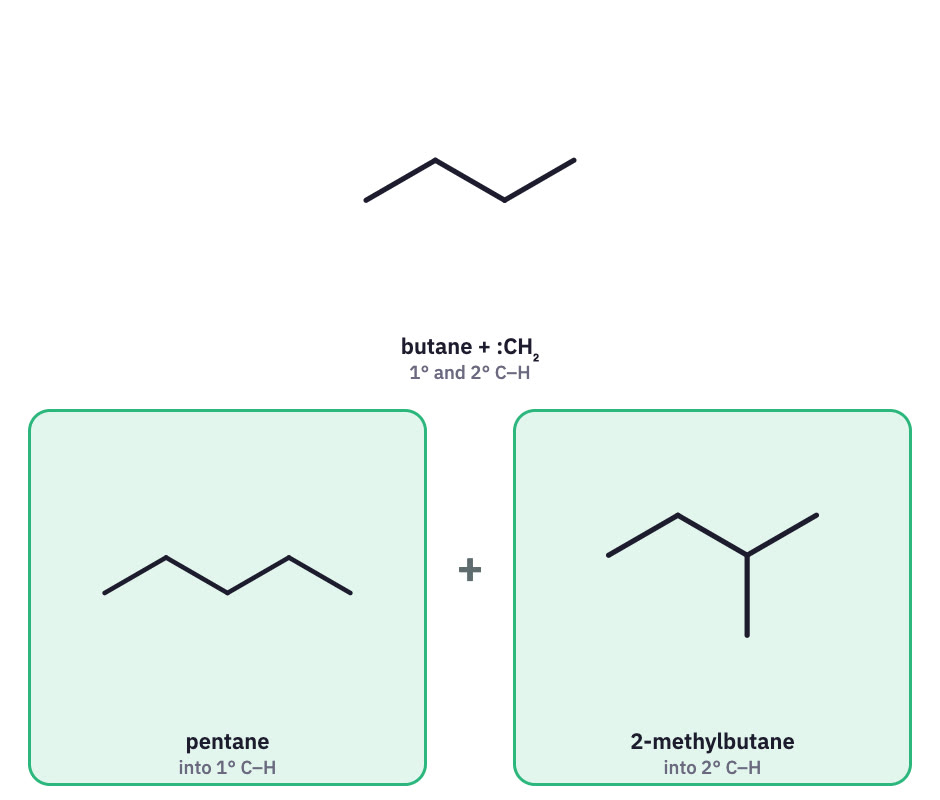
Insertion into a 1° C–H gives pentane; into a 2° C–H, 2-methylbutane.
cis stays cis
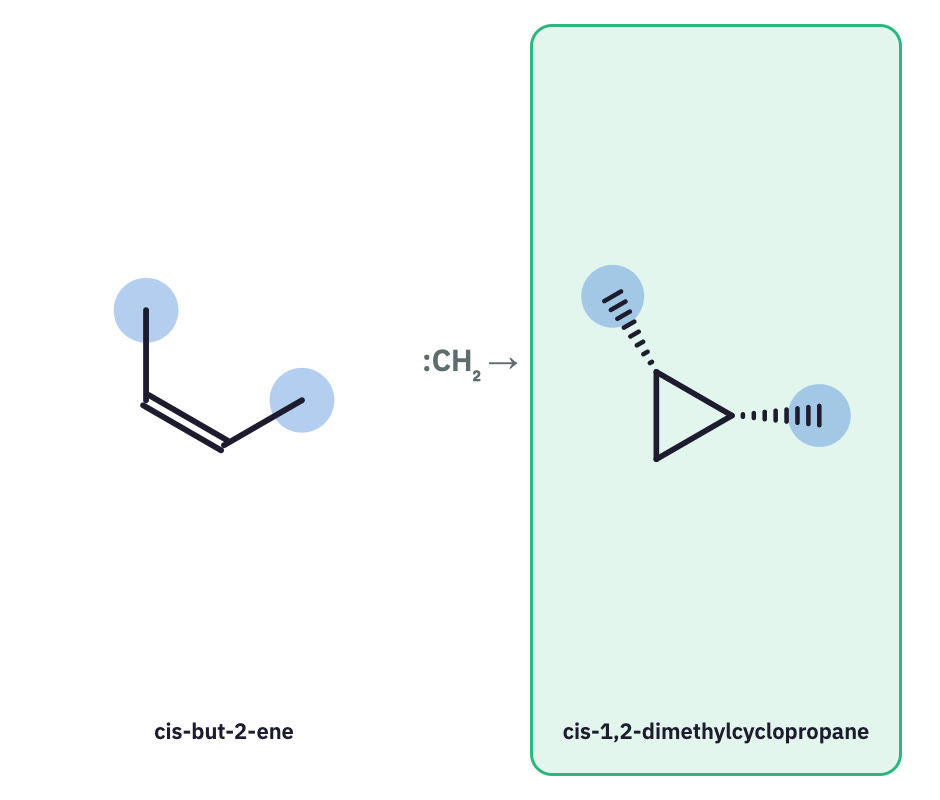
Singlet :CH₂ adds to cis-but-2-ene in one step, giving cis-1,2-dimethylcyclopropane.
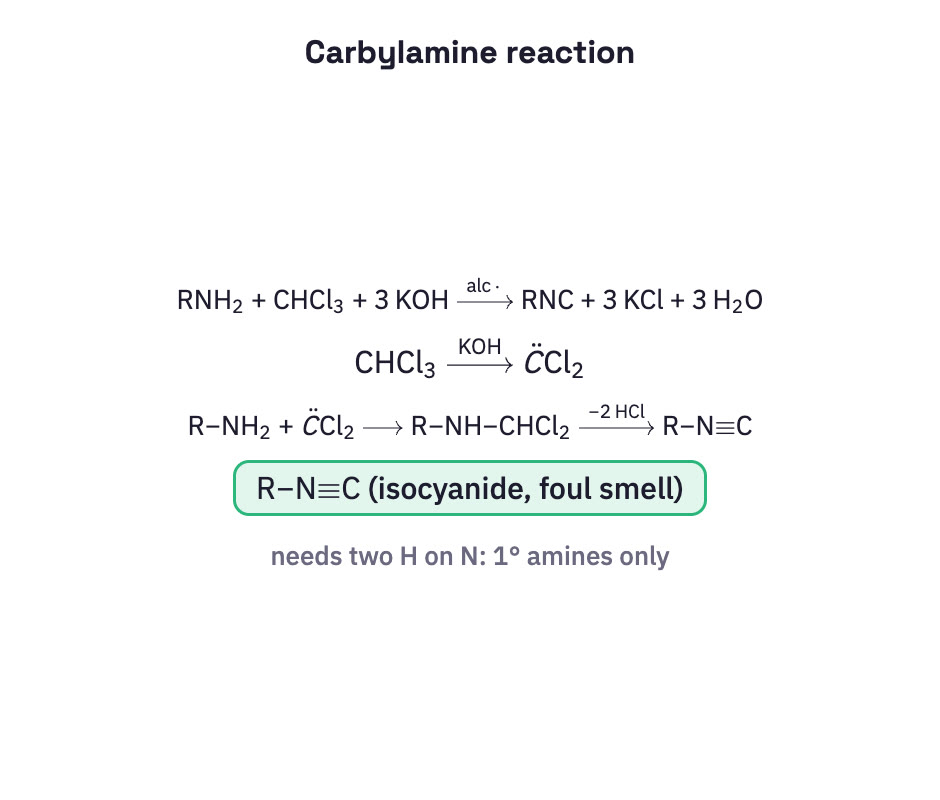
Carbylamine reaction
. Dichlorocarbene attacks N; two HCl are lost. Only primary amines (two H on N) give the foul-smelling isocyanide.
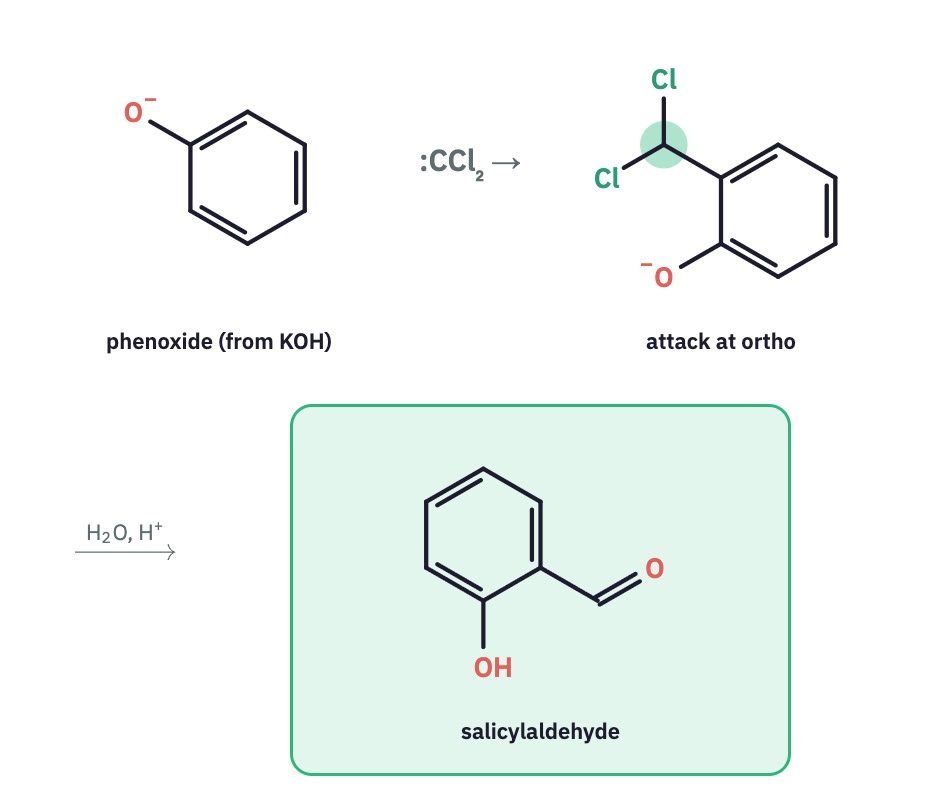
Reimer–Tiemann reaction
Phenol + + aqueous KOH, then acid → salicylaldehyde. The phenoxide ring attacks the electrophile :CCl₂ at ortho; the –CHCl₂ group is hydrolysed to –CHO.
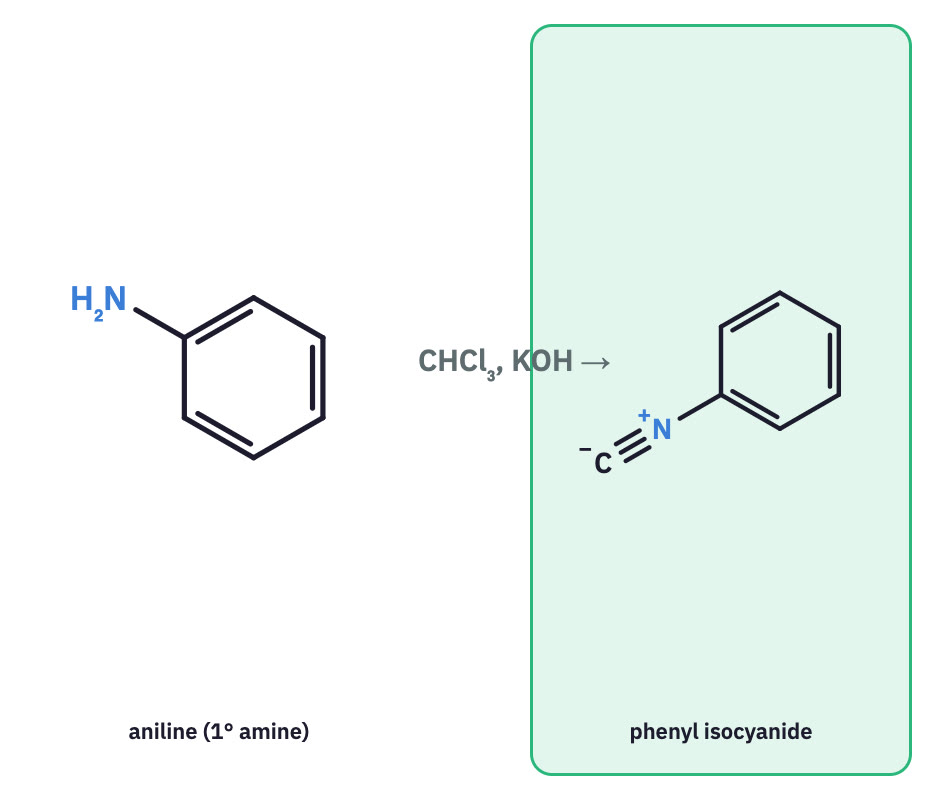
Aniline → phenyl isocyanide
; intermediate :CCl₂.
Key formulas
One for every idea
1. Show how dichlorocarbene forms when chloroform is treated with potassium tert-butoxide. What type of elimination is this?
- .
- .
H and Cl leave the same carbon: α-elimination.
2. Calculate the spin multiplicity of a carbene whose two non-bonding electrons both have . Name the state and give its shape.
- .
3: a triplet carbene, sp and linear in the book's model.
3. Singlet methylene reacts with butane. Name all the alkanes that can form by insertion.
- Insertion into a 1° C–H (CH₃ ends) gives pentane.
- Insertion into a 2° C–H (CH₂) gives 2-methylbutane.
Pentane and 2-methylbutane.
4. Predict the product when singlet :CH₂ adds to cis-but-2-ene.
- The singlet adds in one step, so the geometry of the alkene is kept.
cis-1,2-Dimethylcyclopropane.
5. Aniline is heated with chloroform and alcoholic KOH. Write the product and the reactive intermediate.
- .
Phenyl isocyanide (foul smell); intermediate dichlorocarbene, :CCl₂.
Your turn
Which of the following amines gives the carbylamine test?
Show the answer and the traps
Aniline, option c: a primary amine, with two H on N.
Dimethylamine is secondary: no.
Trimethylamine is tertiary: no.
And N-methylaniline is secondary too.
Common mistakes
Try these
1. The electrophile that attacks the ring in the Reimer–Tiemann reaction is: (a) (b) : (c) (d)
(b) dichlorocarbene.
2. Give the products of singlet :CH₂ with propane by C–H insertion.
n-Butane (1° C–H) and isobutane, 2-methylpropane (2° C–H).
3. Which carbene state is diamagnetic, and which is a diradical?
Singlet: diamagnetic (paired). Triplet: diradical (two unpaired electrons).
4. What product forms when pyrrole reacts with :CCl₂ (with loss of HCl)?
3-Chloropyridine (ring expansion).
5. Which of these gives an isocyanide with /alc. KOH: ethylamine, diethylamine, triethylamine?
Only ethylamine (primary).