 layrd.liveLayer by Layer
Mechanism of Organic Reactions
Twenty-three connected videos that build the chapter layer by layer: electron displacement effects first, then acidity and basicity, then the reactive intermediates and reagents, and finally the mechanisms of substitution, addition and elimination. Every subtopic has a worked example. Each part has a companion page with the key ideas, common mistakes and practice questions; the formula sheet, revision sheet and mixed practice set cover the whole chapter.
Learning path · Formula sheet · Practice set
Print and revise: Revision sheet (PDF) · Formula sheet (PDF, one page)
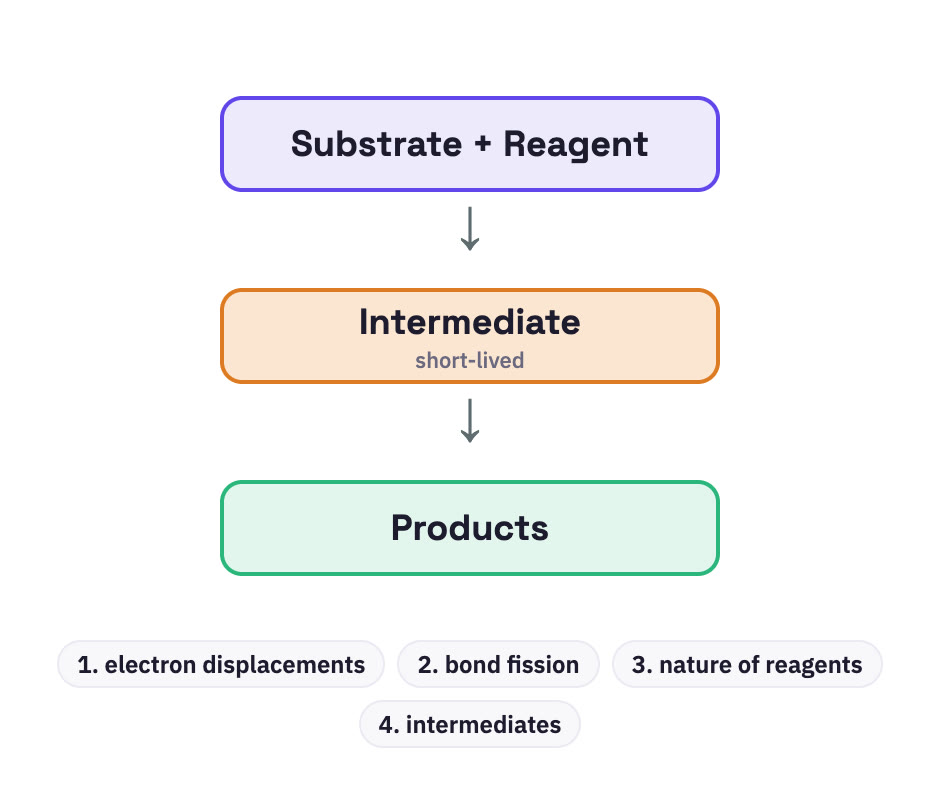
Inductive Effect: −I and +I Groups
See how a polar σ bond relays charge along a carbon chain, rank groups by −I and +I strength, and use the effect to explain alkyl halide reactivity and dipole moments.
Substrate, reagent, intermediate, mechanism · Inductive effect along a chain · −I and +I order of groups · Dipole moments of methyl halides
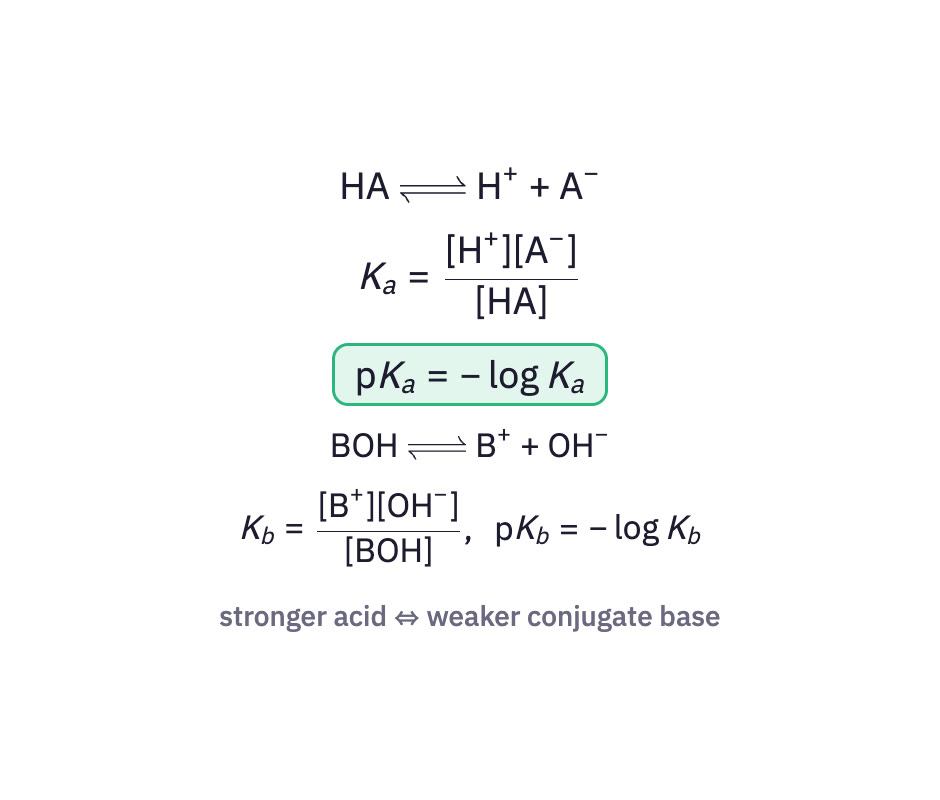
Acid Strength: pKa and Carboxylic Acids
Read Ka, pKa, Kb and pKb, then rank carboxylic acids by how well their substituents spread the carboxylate charge: alkyl groups, branching, halogens, number of halogens and distance.
K_a and pK_a, K_b and pK_b · Carboxylate stability · Halo-acids and distance · Chloroacetic acid series
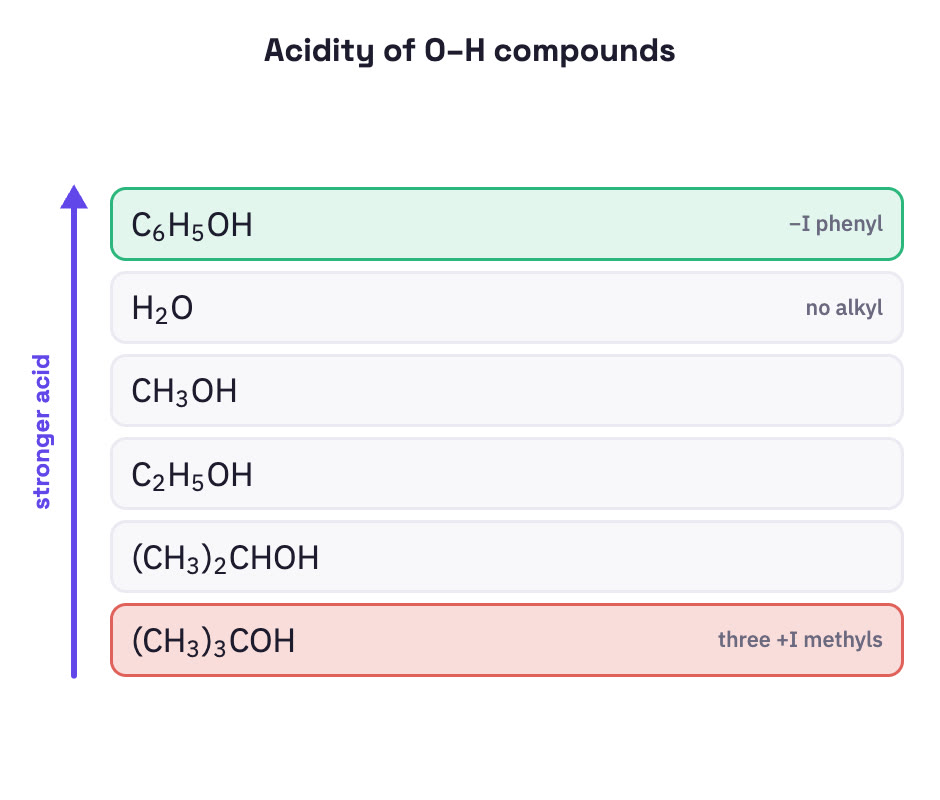
Acidity of Alcohols and Hydrocarbons, Basicity of Amines
Rank phenol, water and alcohols, the hydrogen halides and hydrocarbons by acidity, then rank amines by basicity in water and in the gas phase.
Phenol, water and alcohols · HF to HI and the s-character of carbanions · Basicity of amines in water · Aniline and the Lucas test
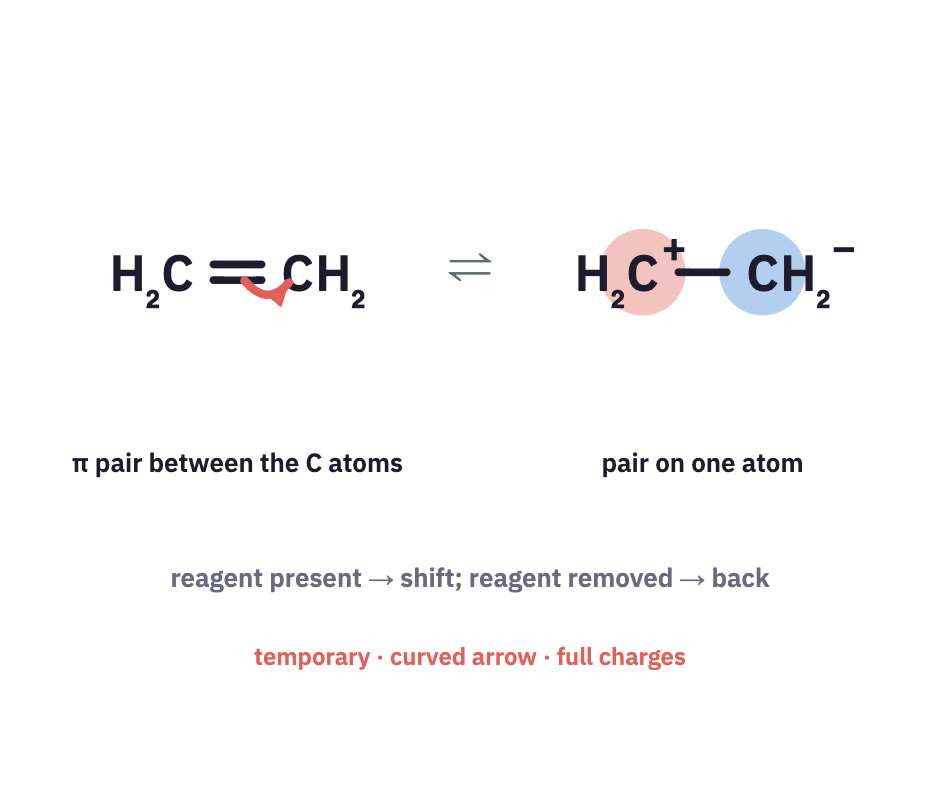
Electromeric and Mesomeric (Resonance) Effects
Follow π electrons as they shift under an attacking reagent (+E, −E) and along conjugated systems (+M, −M), classify groups, and compare the mesomeric and inductive effects.
Electromeric effect +E and −E · Conjugation and the mesomeric effect · +M and −M groups on benzene · Inductive vs mesomeric
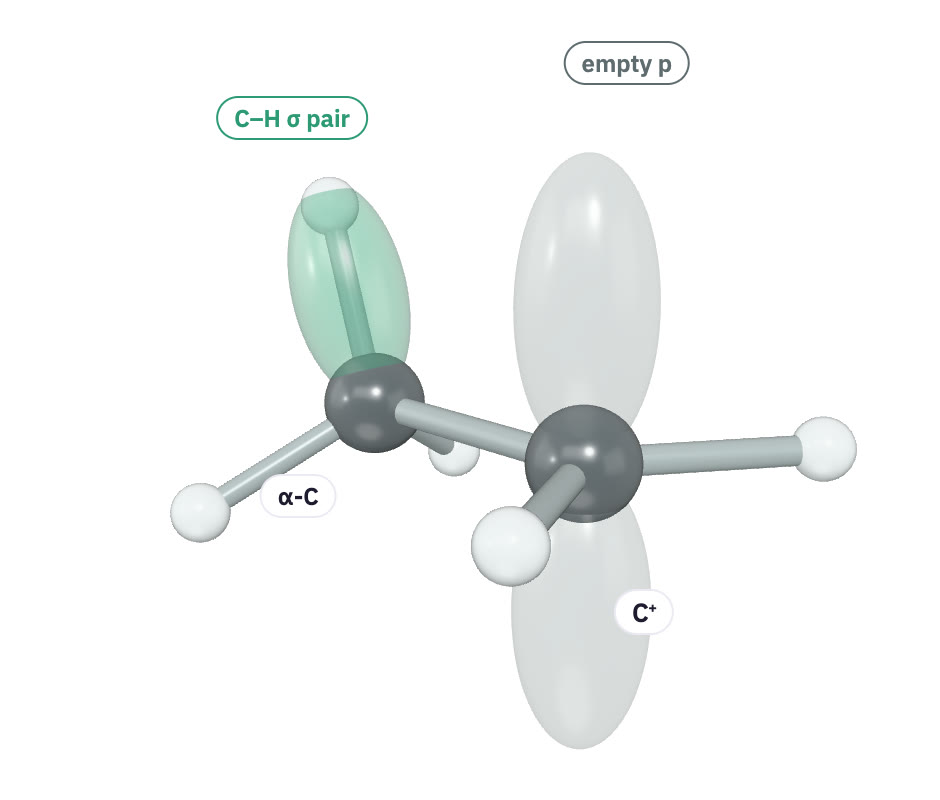
Hyperconjugation and the Baker–Nathan Effect
Count α-hydrogens to explain no-bond resonance, alkene stability from heats of hydrogenation, the stability of carbocations and radicals, and shorter bonds next to π systems.
σ–π conjugation, α-hydrogens · Baker–Nathan effect · Heat of hydrogenation and alkene stability · Bond lengths and dipole moments
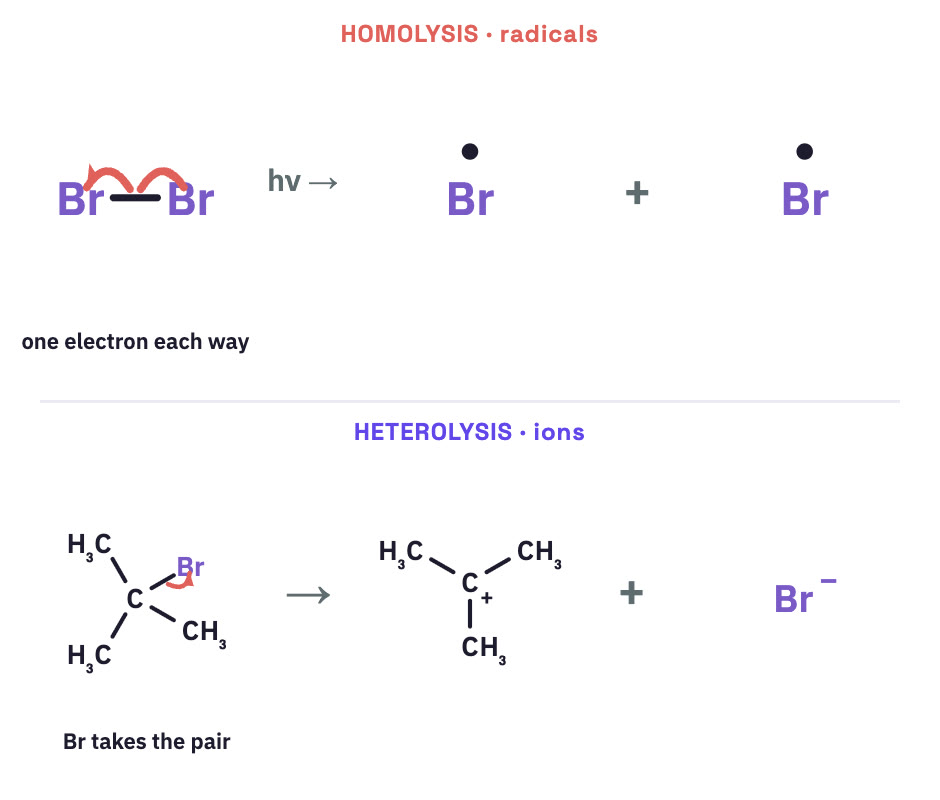
Bond Fission and Free Radicals
Tell homolysis from heterolysis, use bond dissociation energies to rank radicals, and predict how free radicals form, react and how stable they are.
Homolytic and heterolytic fission · Bond dissociation energies · Reactions of free radicals · Stability and shape of radicals
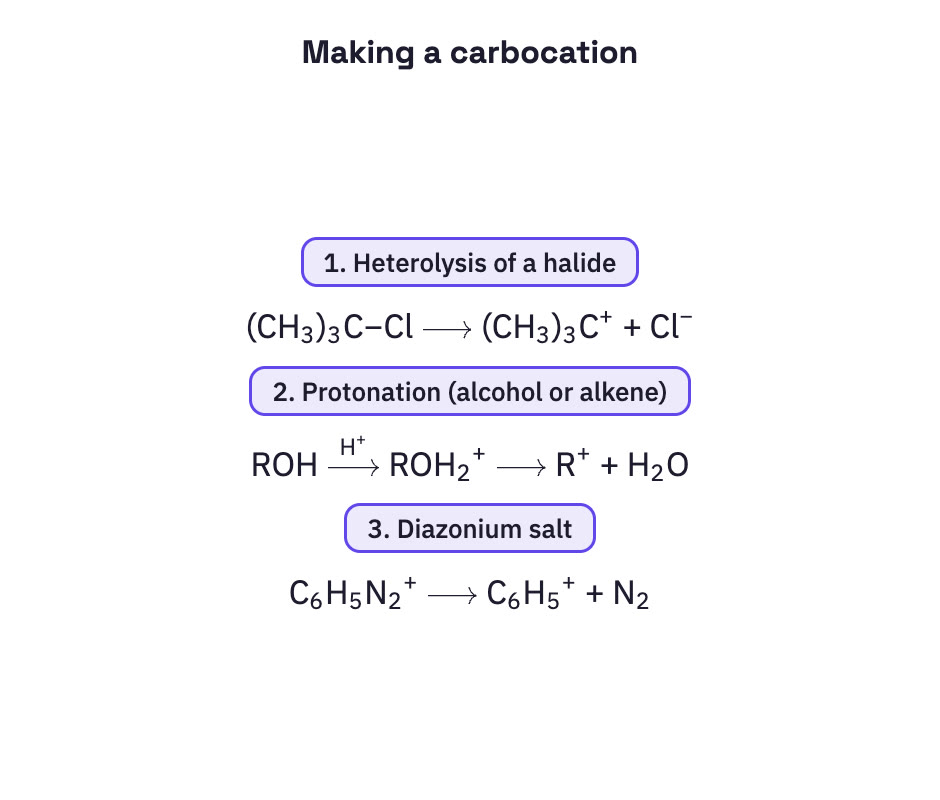
Carbocations: Structure and Stability
Form carbocations from halides, alcohols and diazonium salts, describe the planar sp² cation with its empty p orbital, and rank cations by +I, hyperconjugation, lone pairs and resonance.
Formation of carbocations · sp² planar cation, empty p orbital · 3° > 2° > 1° > methyl · Allyl, benzyl and lone-pair stabilisation
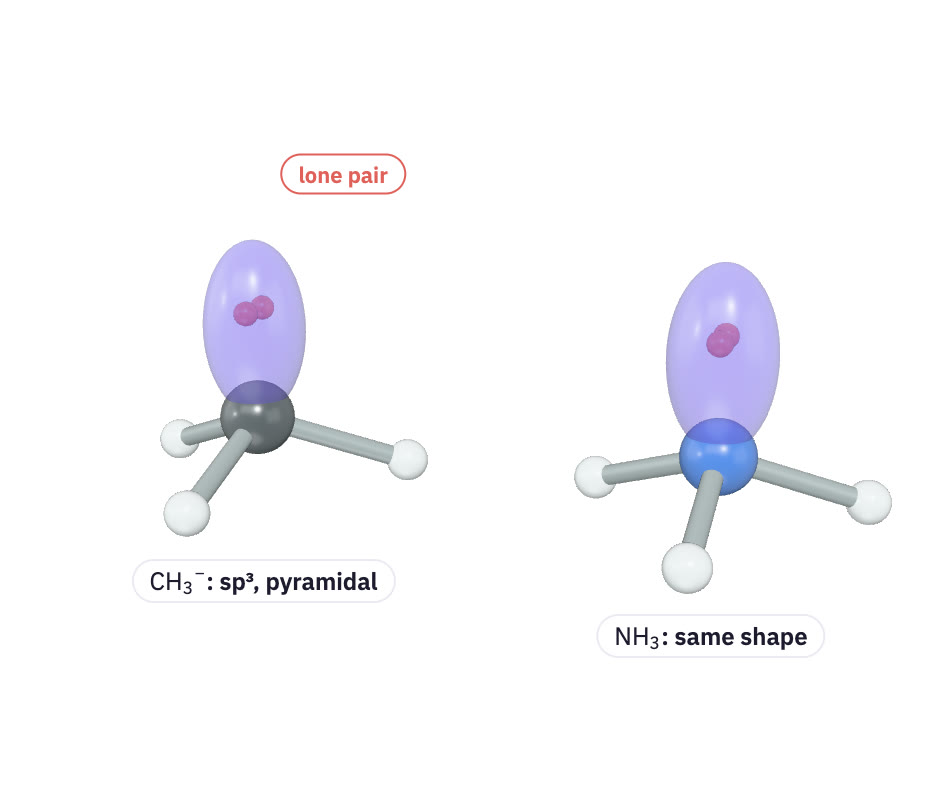
Carbanions: Structure and Stability
Describe the pyramidal sp³ carbanion, rank carbanions by inductive effect, s-character and resonance, and compare radicals, carbocations and carbanions.
Formation and structure of carbanions · Stability: −I, s-character, resonance · Radical vs cation vs anion
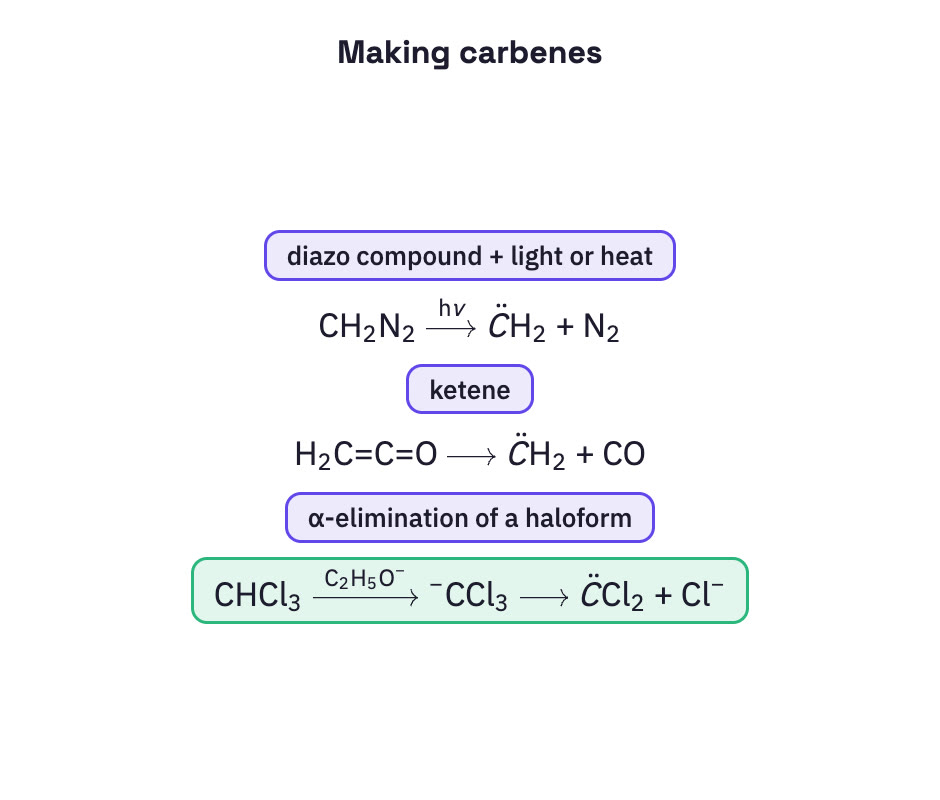
Carbenes: Singlet, Triplet and Their Reactions
Generate carbenes from diazomethane, ketene and chloroform, compare singlet and triplet carbenes, and predict addition, insertion, ring expansion, carbylamine and Reimer–Tiemann products.
Formation of carbenes, α-elimination · Singlet vs triplet carbene · Addition, insertion, ring expansion · Carbylamine and Reimer–Tiemann reactions
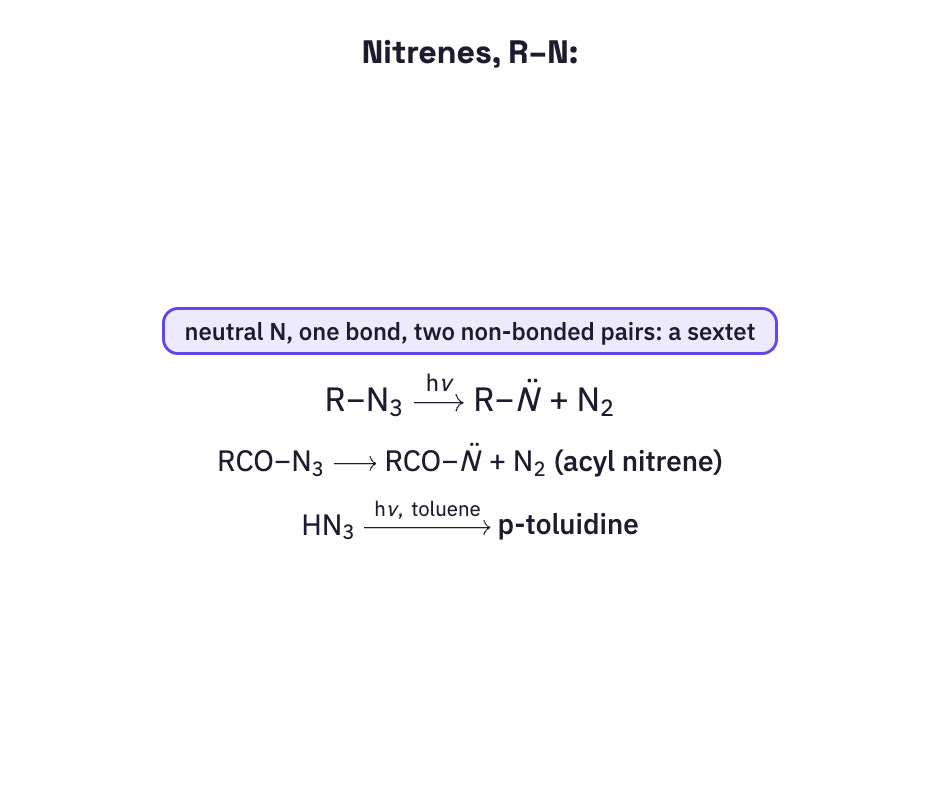
Nitrenes and Benzyne
Identify nitrenes and benzyne, write how each forms, and predict aziridines, insertion products and the cine-substitution products of the benzyne route.
Nitrenes: formation and reactions · Benzyne: structure and formation · Elimination–addition, cine-substitution
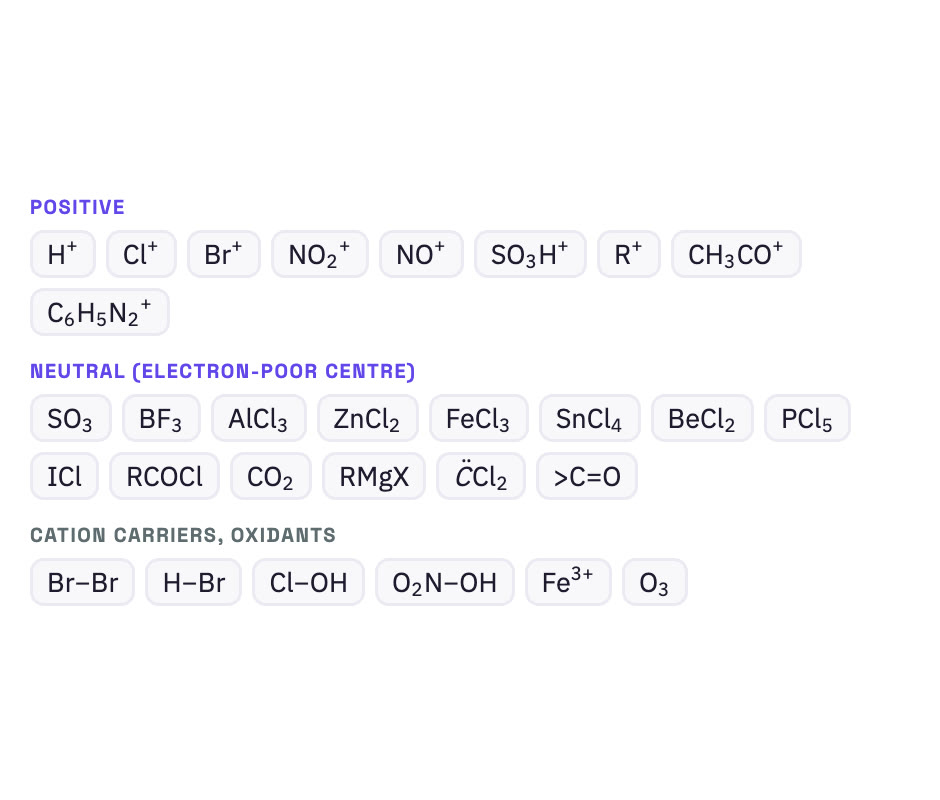
Electrophiles, Nucleophiles and Ambident Reagents
Classify reagents as electrophiles, nucleophiles or both, rank nucleophilicity against basicity, and recognise ambident nucleophiles and the ionising power of solvents.
Electrophiles: positive and neutral · Nucleophiles; nucleophilicity vs basicity · Ambiphiles and ambident nucleophiles · Ionising power of solvents
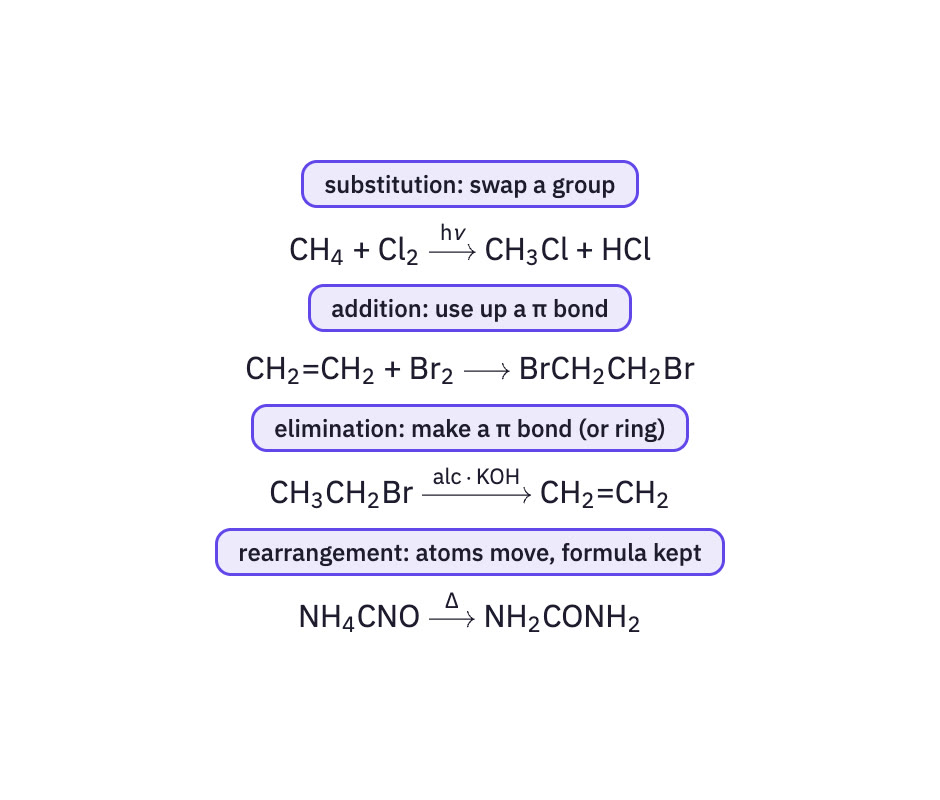
Types of Organic Reactions
Classify a reaction as substitution, addition, α-, β- or γ-elimination, or rearrangement, and give a standard example of each.
Substitution and addition · β-, α- and γ-elimination, Freund reaction · Rearrangements: Fries, Beckmann
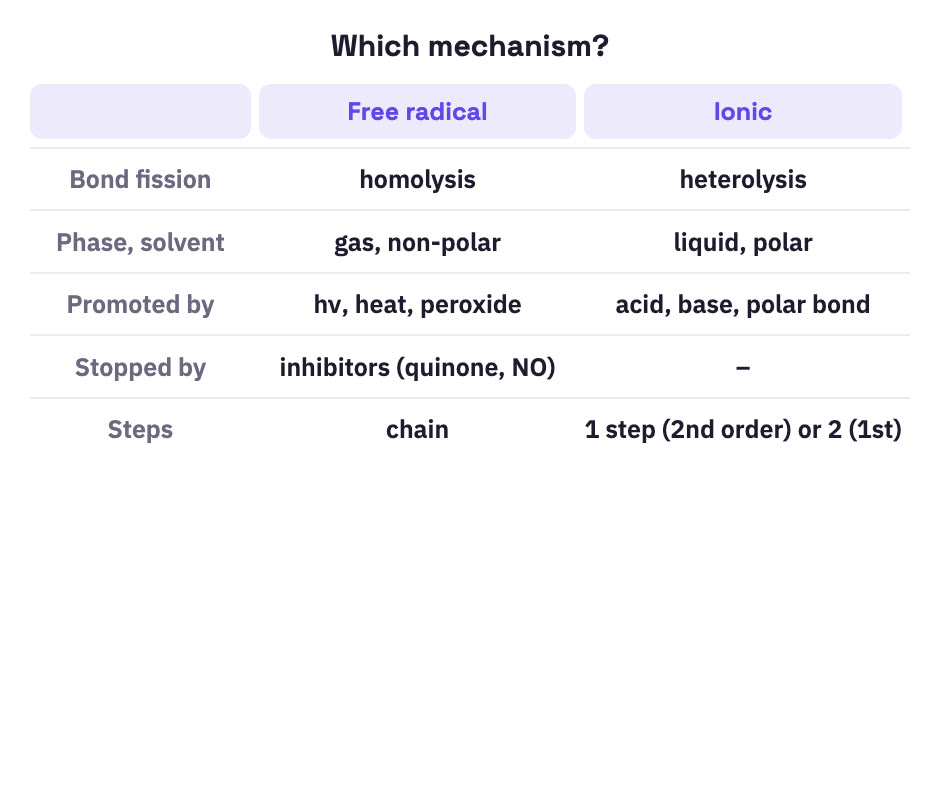
Free Radical Substitution: Chlorination of Methane and NBS
Write initiation, propagation and termination for radical chains, use step enthalpies to explain F₂ > Cl₂ > Br₂ > I₂, and predict benzylic and allylic (NBS) halogenation products.
Free radical vs ionic mechanism · Chlorination of methane: chain and energetics · Gomberg, Wurtz, side-chain halogenation · Allylic bromination with NBS
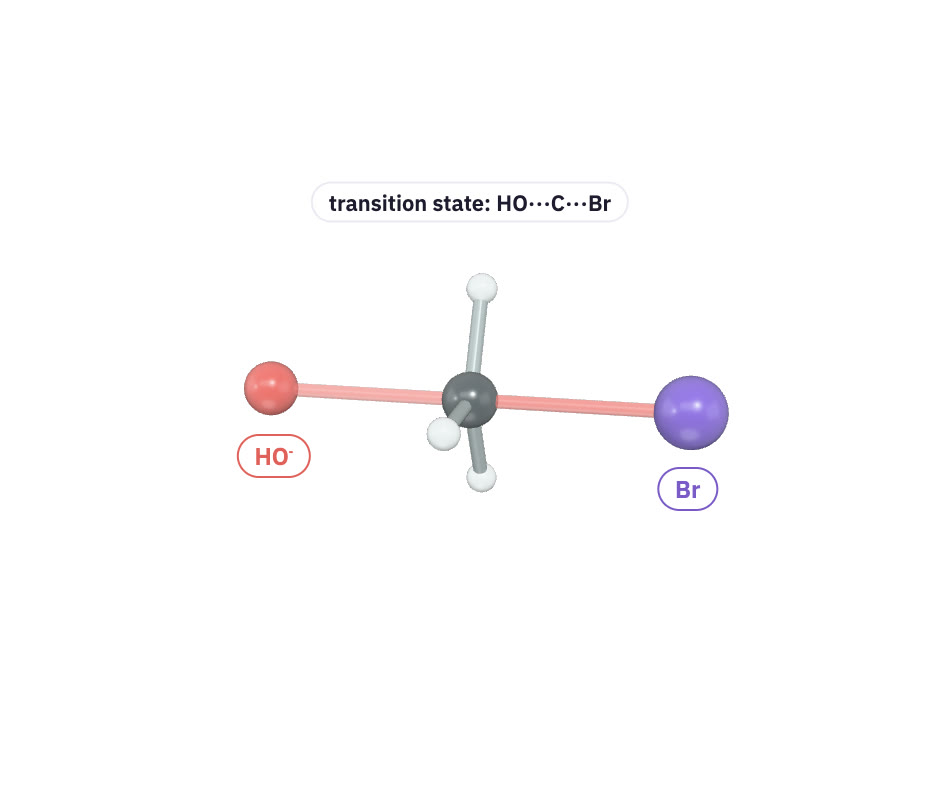
SN2 Reaction: Mechanism, Walden Inversion and Rates
Follow the one-step backside attack with Walden inversion, and predict SN2 rates from the substrate, the nucleophile, the leaving group and the solvent.
Rate = k[RX][Nu⁻] · Backside attack, Walden inversion · Steric effect: methyl > 1° > 2° > 3° · Polar aprotic solvents
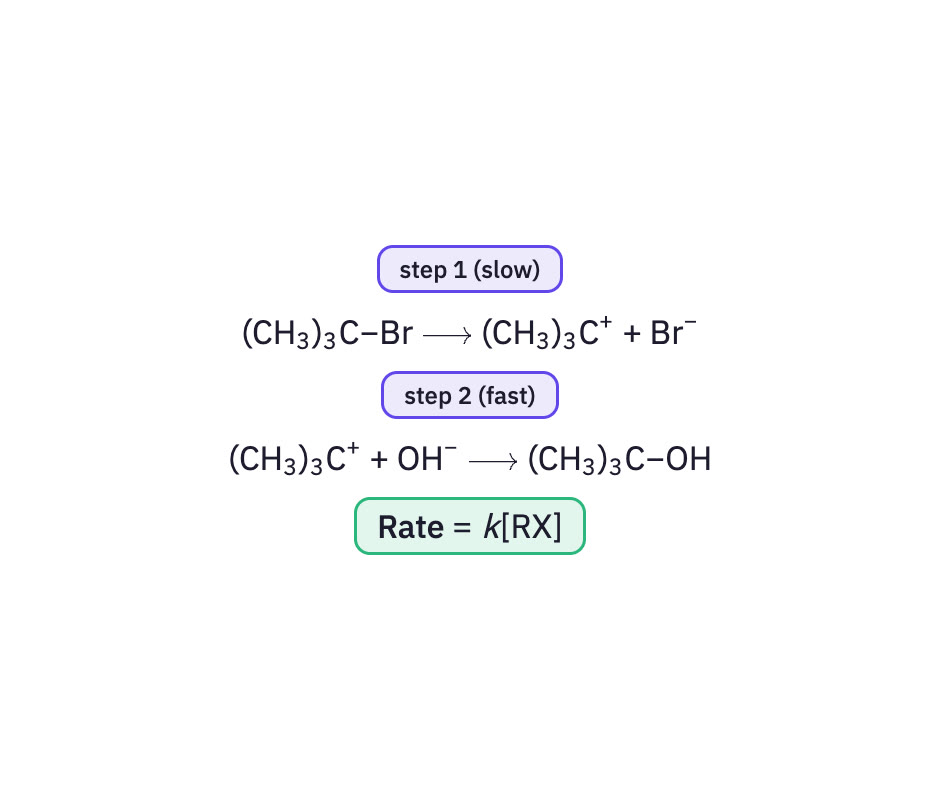
SN1 Reaction: Carbocations, Racemisation and Rearrangement
Follow the two-step SN1 route through a planar carbocation, explain racemisation with some inversion, and predict products after 1,2-shifts.
Rate = k[RX] · Two steps through a carbocation · Racemisation with some inversion · 1,2-hydride and methyl shifts
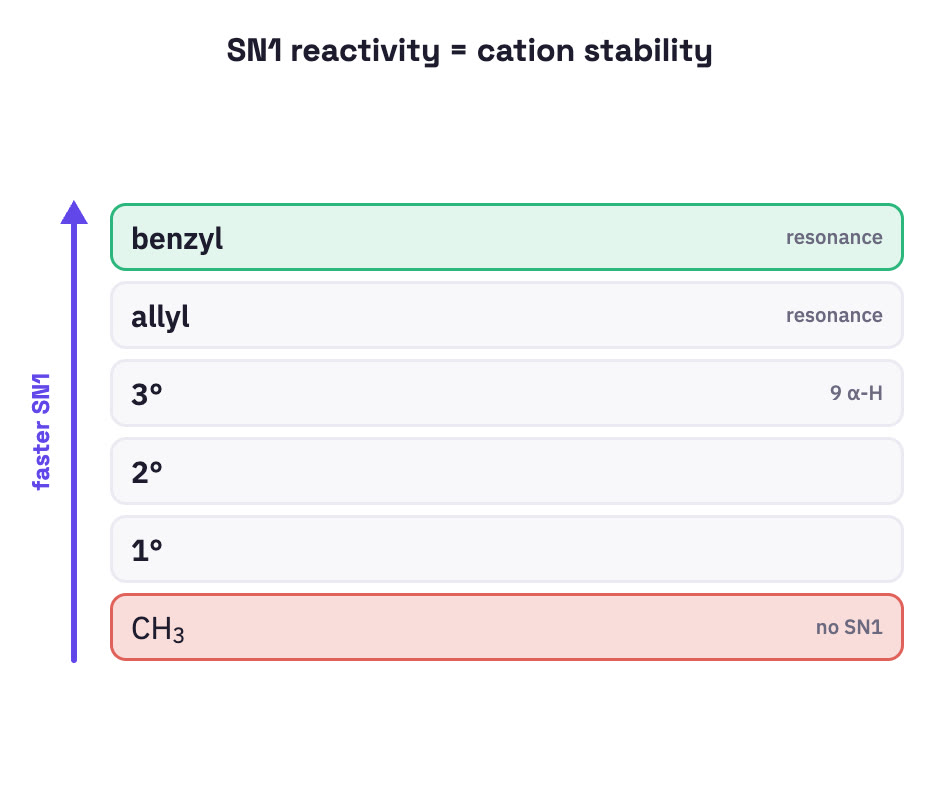
SN1 vs SN2: Substrate, Leaving Group and Solvent
Rank substrates, leaving groups and solvents for SN1, then use the twelve-point comparison to choose between SN1 and SN2 for any substrate and conditions.
SN1 substrate order · Leaving group and solvent polarity · SN1 vs SN2 comparison
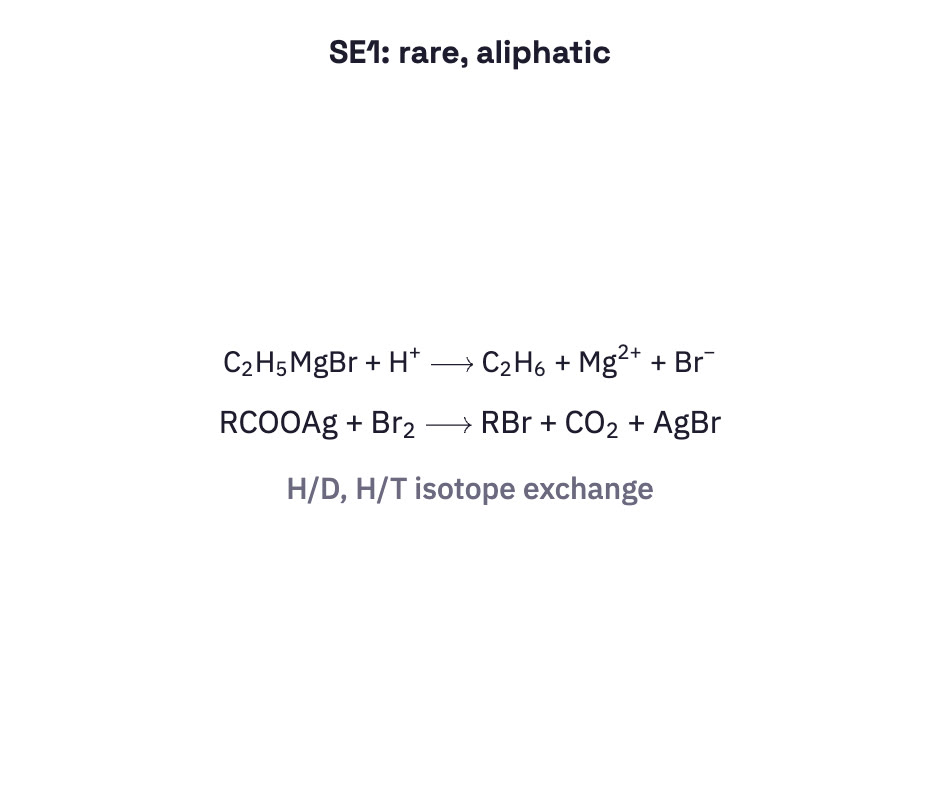
Electrophilic Substitution: SE1 and SE2 in Benzene
Recognise the rare aliphatic SE1 cases, then write the three-step SE2 mechanism for benzene: making the electrophile, the arenium ion, and the loss of H⁺.
SE1 in aliphatic compounds · Making the electrophile · Arenium ion (Wheland intermediate) · Proton loss restores aromaticity
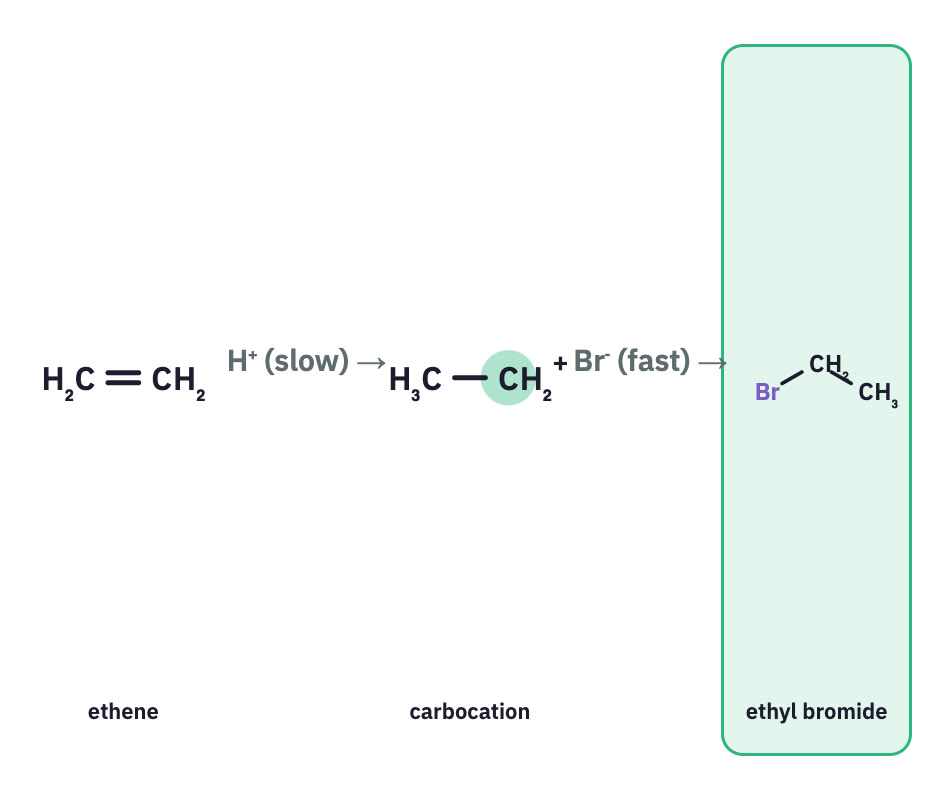
Electrophilic Addition: Markovnikov's Rule and Rearrangements
Write the two-step addition of HX to alkenes, derive Markovnikov's rule from carbocation stability, and predict products after hydride, methyl and phenyl shifts.
Two-step electrophilic addition · Markovnikov's rule · 1,2-hydride, methyl and phenyl shifts
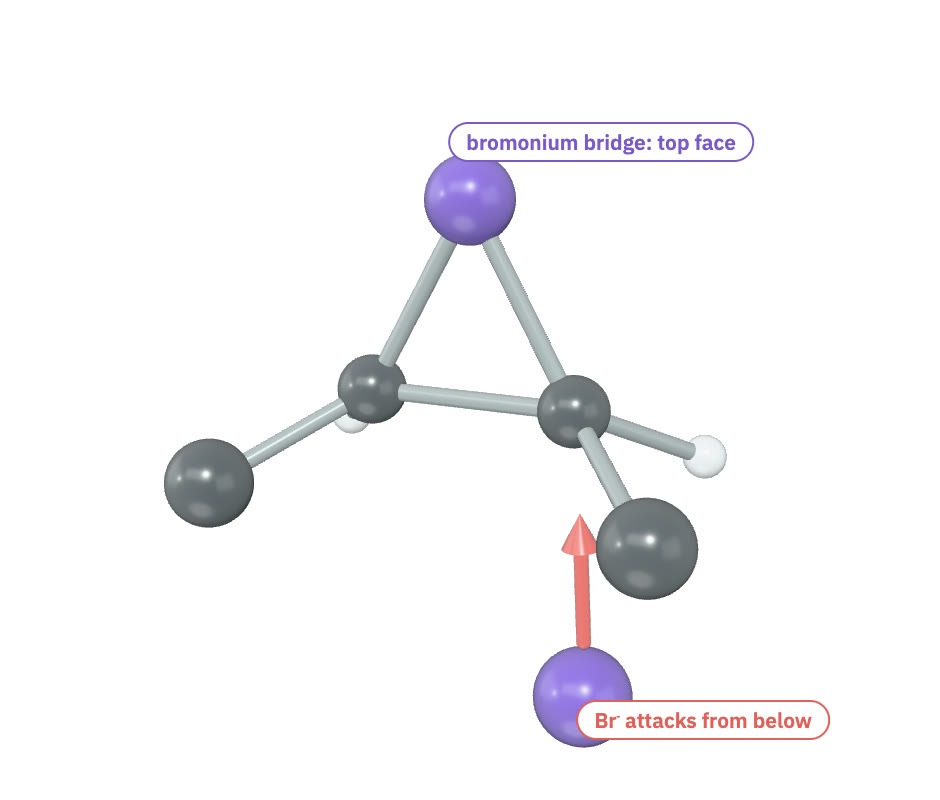
Anti-Addition of Bromine and 1,4-Addition to Dienes
Explain anti-addition of bromine through the bromonium ion (cis gives racemic, trans gives meso), and predict 1,2- and 1,4-addition to conjugated dienes.
Bromonium ion, anti-addition · cis → racemic, trans → meso · 1,2- vs 1,4-addition to dienes
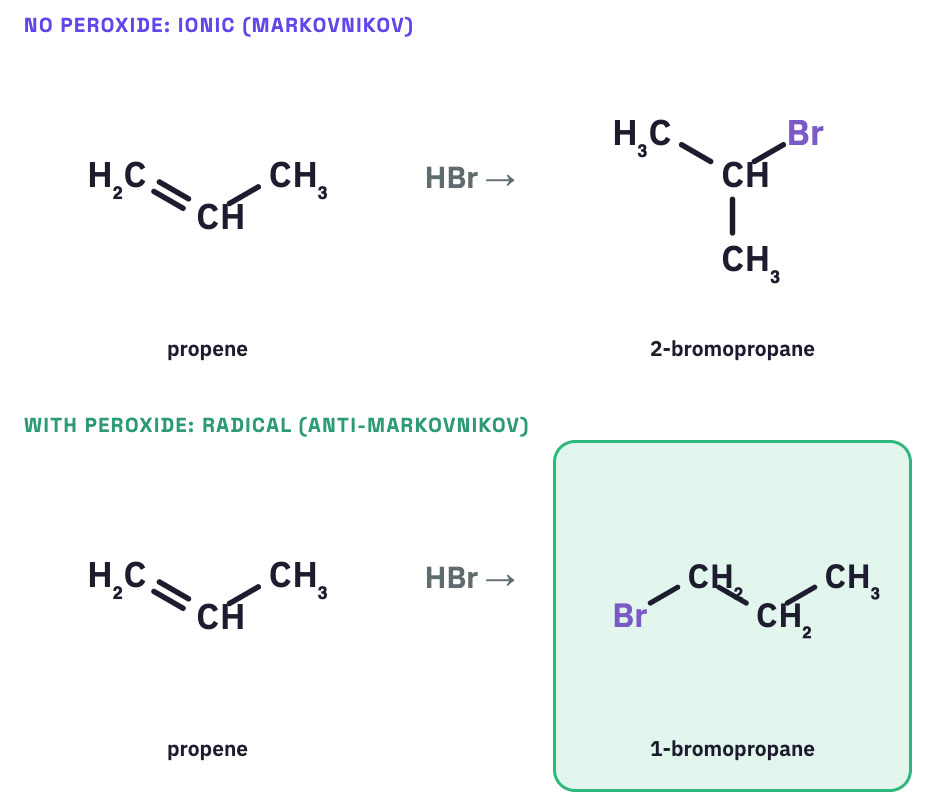
Peroxide Effect: Anti-Markovnikov Addition
Explain the Kharasch peroxide effect with HBr by a radical chain, see why HCl and HI don't show it, and recognise anti-Markovnikov addition to alkenes with electron-withdrawing groups.
Kharasch peroxide effect · Why only HBr · −M groups and anti-Markovnikov addition · Radical addition of halogens
Nucleophilic Addition to the Carbonyl Group
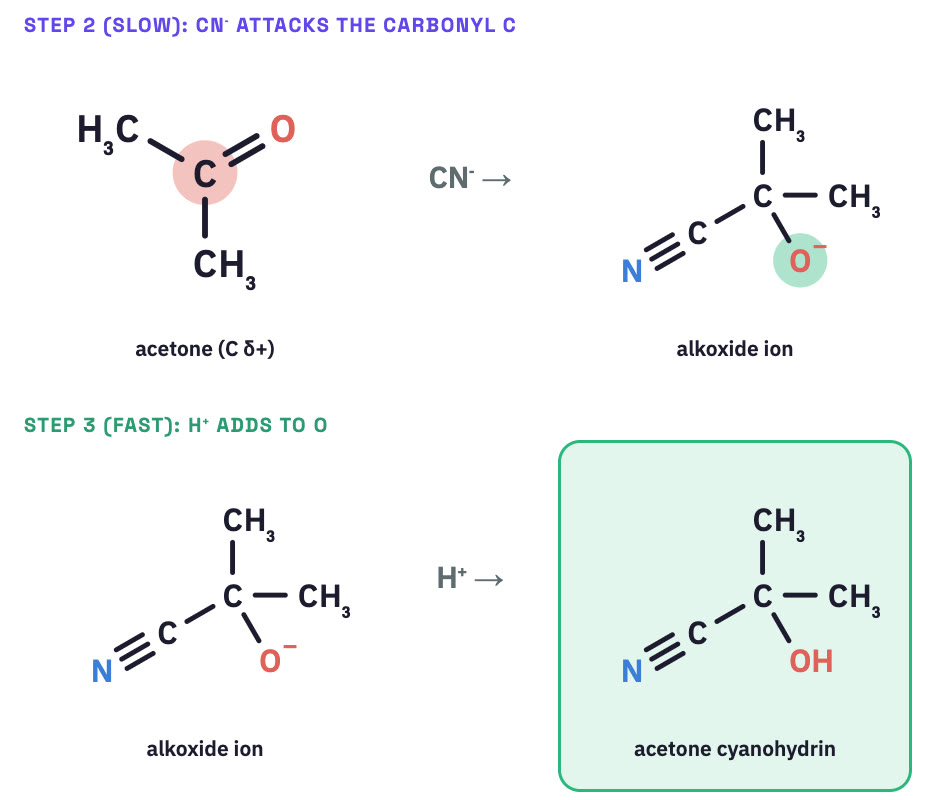
Write the mechanism of HCN addition to C=O, rank aldehydes and ketones by reactivity, and recognise bisulphite, Grignard and other nucleophilic additions.
Cyanohydrin formation · Reactivity order of carbonyl compounds · Bisulphite and Grignard additions
E1 and E1cB Eliminations: Saytzeff vs Hofmann
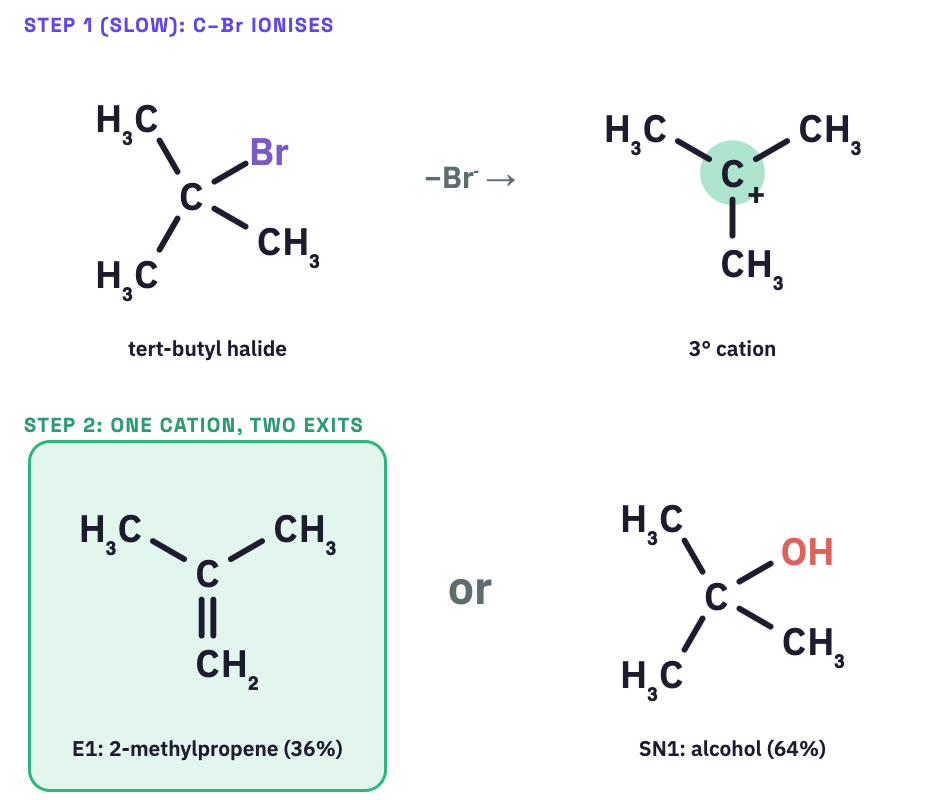
Write the E1 mechanism and its competition with SN1, predict Saytzeff and Hofmann alkenes, order alcohols for acid dehydration, and recognise the E1cB route.
E1 vs SN1 · Saytzeff and Hofmann products · Acid dehydration of alcohols · E1cB elimination
E2 Elimination and Anti-periplanar Geometry
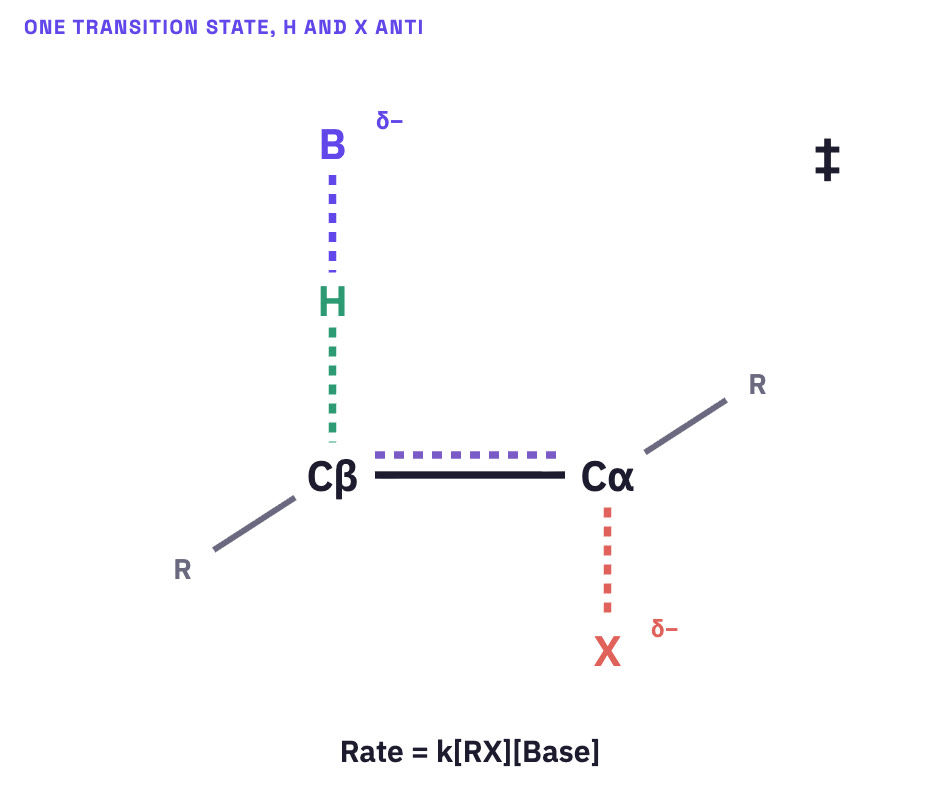
Write the one-step E2 mechanism, see why a better leaving group speeds it, and use anti-periplanar geometry to predict which alkene forms.
Rate = k[RX][Base] · Concerted transition state · Syn- vs anti-periplanar · Stereospecific E2